
CAPSULE WORKWEAR: 7 PIECES FOR A MODERN OFFICE LOOK
The modern office wardrobe has evolved. Dress codes are no longer defined by rigidity, yet professionalism still requires structure. The shift is not toward casual indifference, but toward intelligent refinement. Silhouettes are softer. Tailoring is more fluid. Comfort and authority now coexist.
A capsule workwear wardrobe is not about owning fewer pieces for aesthetic minimalism alone. It is about strategic selection. Each garment must support the others. Proportion must be deliberate. Fabric must justify its presence. Color must reinforce cohesion.
When built correctly, a workwear capsule eliminates indecision. It creates clarity. It allows you to enter a room without adjusting, correcting, or questioning what you are wearing.
The following seven pieces form the foundation of a modern office wardrobe rooted in Scandinavian restraint, neutral discipline, and long-term relevance.
1.THE OVERSIZED STRUCTURED BLAZER
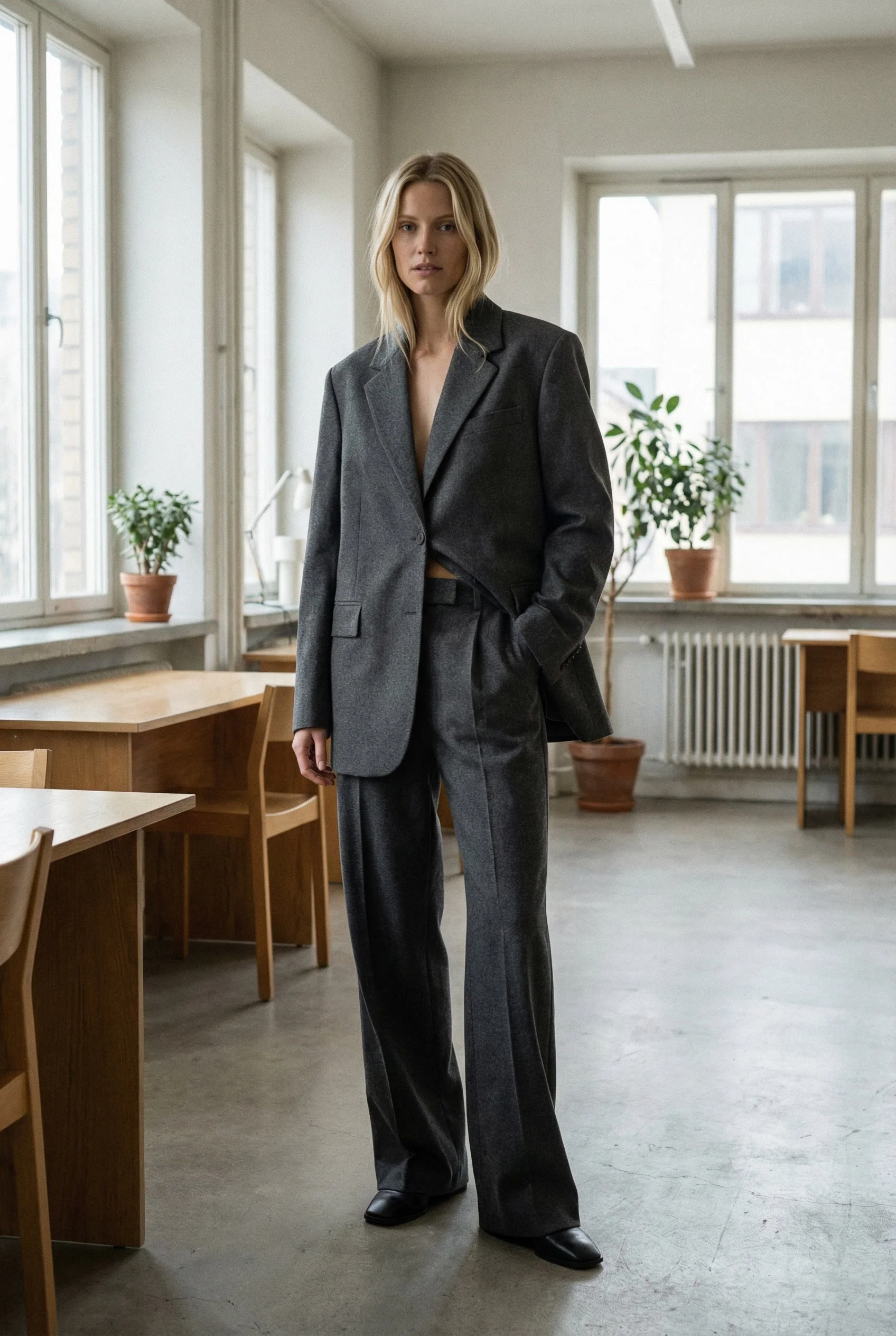
The blazer remains the architectural core of workwear. However, the modern iteration has moved away from fitted rigidity. Today’s blazer is slightly oversized, intentionally relaxed, and cut to create a vertical line.
A successful oversized blazer should have:
Defined shoulders without excessive padding
A longer hemline that extends past the hip
Structured wool or wool-blend fabric
Clean lapels without ornate detailing
The silhouette must feel intentional, not borrowed. The difference between polished and careless lies in proportion.
Neutral tones dominate this category for a reason. Black provides sharp contrast. Charcoal softens severity. Deep chocolate introduces warmth without sacrificing professionalism. Taupe offers versatility across seasons.
Why it works:
An oversized blazer creates immediate authority
It sharpens wide-leg trousers, balances midi skirts, and elevates fine knits
It frames the body without constriction and establishes visual control over the entire outfit
In colder climates, it layers seamlessly beneath long coats. In transitional seasons, it becomes outerwear


2. WIDE-LEG TAILORED TROUSERS
The evolution of professional tailoring is most visible in trousers. Slim silhouettes feel dated. Wide-leg tailoring feels contemporary, balanced, and deliberate.
Key characteristics:
High-rise waist for elongation
Fluid drape that moves without clinging
Full-length hem that nearly grazes the shoe
Clean front construction with minimal pleating
Fabric matters significantly. A structured wool blend holds shape while allowing movement. Lightweight fabrics may collapse visually, diminishing the intended authority.
Color foundations should include grey, black, espresso, and deep navy.
Why it works:
Wide-leg trousers create balance when paired with oversized blazers and fine knits. They introduce space into the silhouette without overwhelming it. The result is confidence without severity.
They transition easily from office to evening settings and pair equally well with structured shirts and softer layers.


3. THE FINE KNIT LAYER
Modern office dressing recognizes that comfort enhances performance. Fine knits replace stiffness with refinement.
The ideal knit layer should:
Be lightweight merino, cashmere, or fine cotton blend
Skim the body without clinging
Maintain a clean neckline (crew or subtle high neck)
Avoid excessive embellishment
Neutral tones remain essential: oatmeal, soft grey, black, deep espresso.
Why it works:
A fine knit softens structured tailoring without diminishing professionalism. It creates textural depth while maintaining restraint. Under a blazer, it feels intelligent and composed rather than corporate.
In colder climates, it allows layering without bulk. In transitional seasons, it stands alone beneath a structured jacket.



4. THE CRISP BUTTON-DOWN
The button-down remains foundational but must be modernized through cut and styling.
A contemporary shirt should:
Be slightly relaxed rather than fitted
Use structured cotton poplin or silk blend
Maintain a crisp collar
Fall smoothly when tucked
White remains the strongest anchor. Pale blue introduces subtle variation. Ivory softens contrast against darker tailoring.
Why it works:
A button-down sharpens wide-leg trousers and balances oversized silhouettes. It anchors softer layers and transitions seamlessly between formal and business-casual environments.
Proper styling enhances modernity. A subtle half-tuck, slightly rolled sleeves, or layered under a knit vest maintains refinement while avoiding rigidity.


5. THE NEUTRAL MIDI SKIRT
While trousers dominate modern workwear, the midi skirt introduces movement and dimension.
The ideal midi skirt should:
Fall below the knee
Feature a bias cut or subtle A-line
Maintain clean lines without excessive volume
Be crafted from wool blend, matte satin, or structured crepe
Charcoal, black, and espresso provide maximum versatility.
Why it works:
The midi skirt balances oversized knits and structured blazers. It expands outfit combinations within the capsule while preserving cohesion. When styled correctly, it feels powerful rather than delicate.
Paired with boots, it creates a grounded winter look. With loafers or flats, it transitions smoothly into milder seasons.


6. THE MINIMALIST LONG COAT
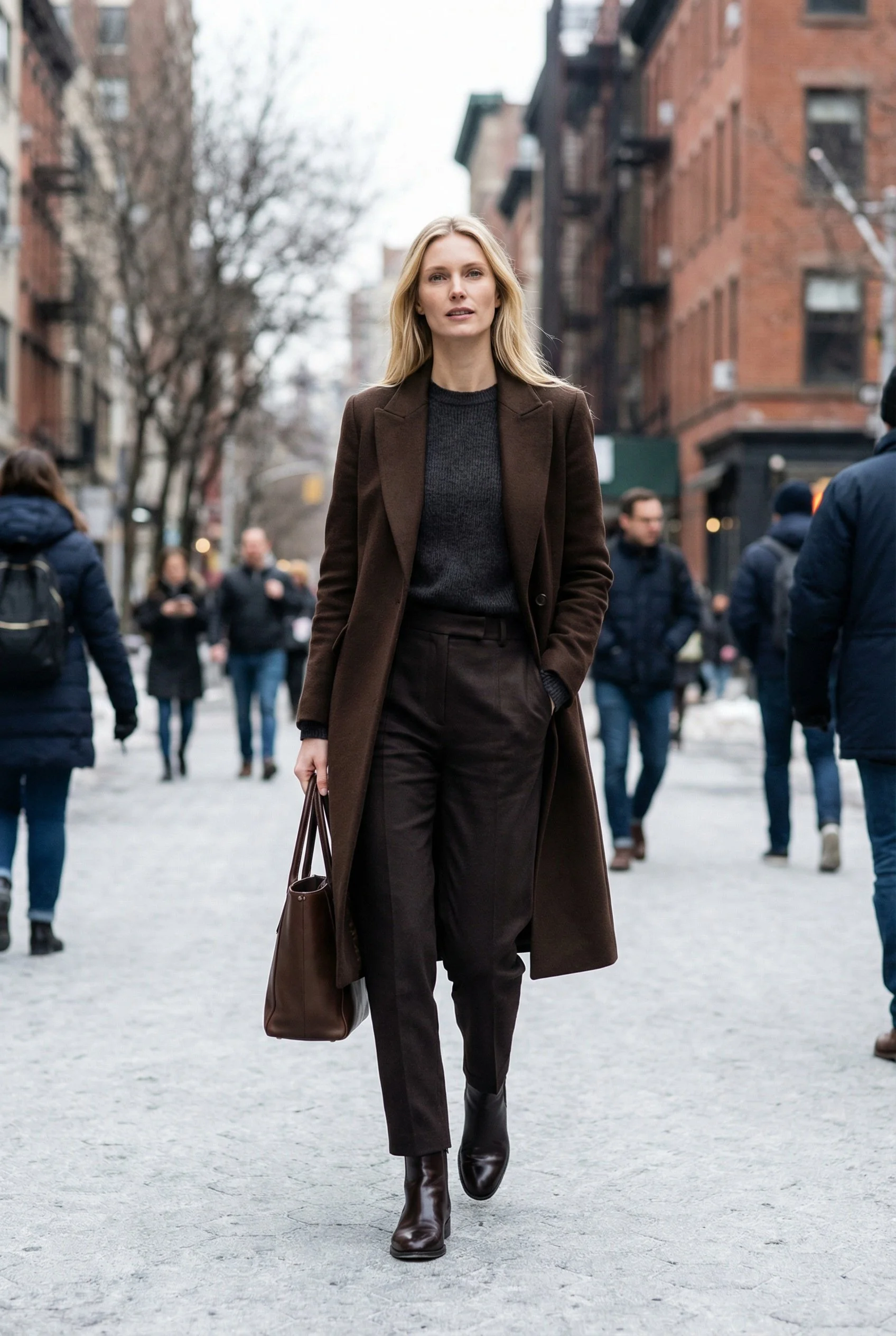
In colder climates, outerwear defines the first impression. A long wool coat is not optional — it is structural.
Key features:
Below-the-knee length
Clean lapels
Minimal hardware
Structured but fluid fabric
Black offers authority. Camel adds warmth. Charcoal remains universally adaptable. Chocolate introduces depth without harshness.
Why it works:
A long coat reinforces the vertical silhouette created by tailored layers. It unifies the outfit and communicates refinement before you enter the room.

7. REFINED LEATHER SHOES
Footwear completes the structure.
Modern work-appropriate options include:
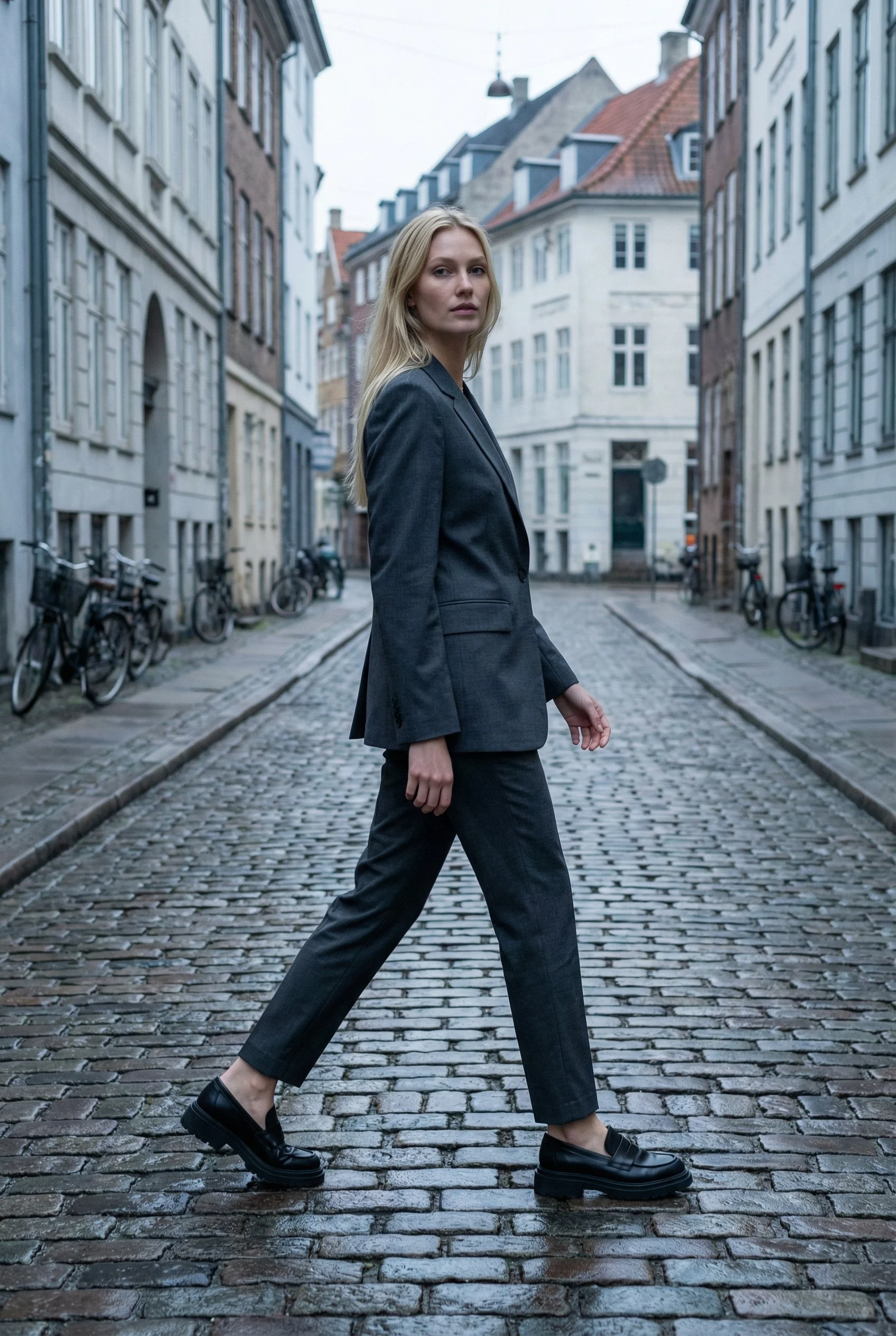
Minimal leather loafers
Sleek ankle boots
Polished flats
Low block heels
Toe shapes should be clean and slightly elongated. Avoid excessive ornamentation.
Black leather remains the strongest foundation, though dark brown integrates well into neutral palettes.
Why it works:
Shoes anchor the entire silhouette. They determine whether tailoring feels contemporary or dated. Clean-lined footwear reinforces the capsule’s coherence.


HOW THESE 7 PIECES WORK TOGETHER
The strength of a capsule lies in combination. With these seven pieces, you can create numerous office-ready outfits without visual inconsistency.
Examples:
Charcoal blazer + grey wide-leg trousers + fine knit + loafers

Chocolate blazer + white button-down + espresso trousers + ankle boots

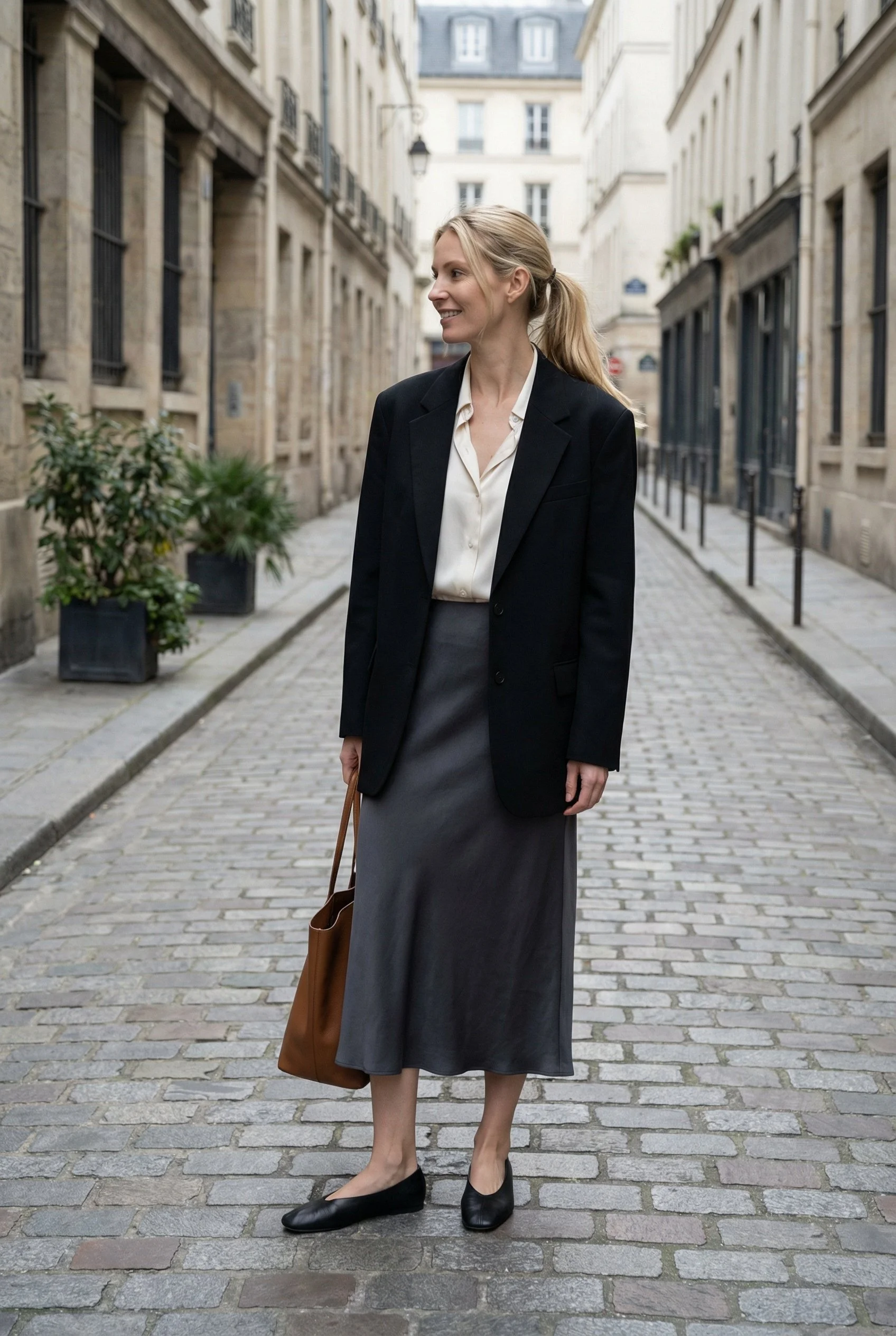
Black blazer + midi skirt + ivory blouse + flats
Long coat + knit + tailored trousers + boots

Each piece supports the others because the palette is disciplined and the silhouettes are intentional.
A modern capsule workwear wardrobe is not restrictive. It is strategic. It eliminates visual noise and replaces it with proportion, quality, and cohesion.
Professional presence is not created through excess. It is created through clarity. When each garment is chosen deliberately and works within a unified system, dressing becomes efficient and authoritative.
Seven categories. Multiple combinations. Long-term relevance.
That is the foundation of modern office style.
