
The Small Closet Fix That Makes Everything Feel New
How a quiet shift in structure, not shopping, transforms the way your wardrobe lives and breathes.
The Problem Isn’t Your Clothes — It’s the System
There is a moment almost everyone with a small closet experiences: you open the door, and instead of clarity, you feel resistance. Pieces are there — good ones — but they are hidden behind each other, folded into piles that collapse, or hanging in a way that makes everything look heavier than it actually is.
A small closet rarely fails because of lack. It fails because it was never designed to show what you own.
The real transformation happens not when you add more, but when you change how your wardrobe is seen. A well-adjusted closet creates a visual calm that immediately makes everything feel intentional, even if nothing new was added.

The One Fix: Create Visual Breathing Space
The most effective change — the one that instantly resets a small closet — is surprisingly simple:
Reduce visual density by creating structured spacing between pieces.
4
When clothing is tightly packed, even beautiful garments lose their identity. Colors blend together, textures disappear, and everything begins to feel interchangeable. But when spacing is introduced, even a simple white shirt begins to feel like a considered piece.
This adjustment allows the wardrobe to breathe — visually and psychologically.

Step One: Edit Without Overthinking
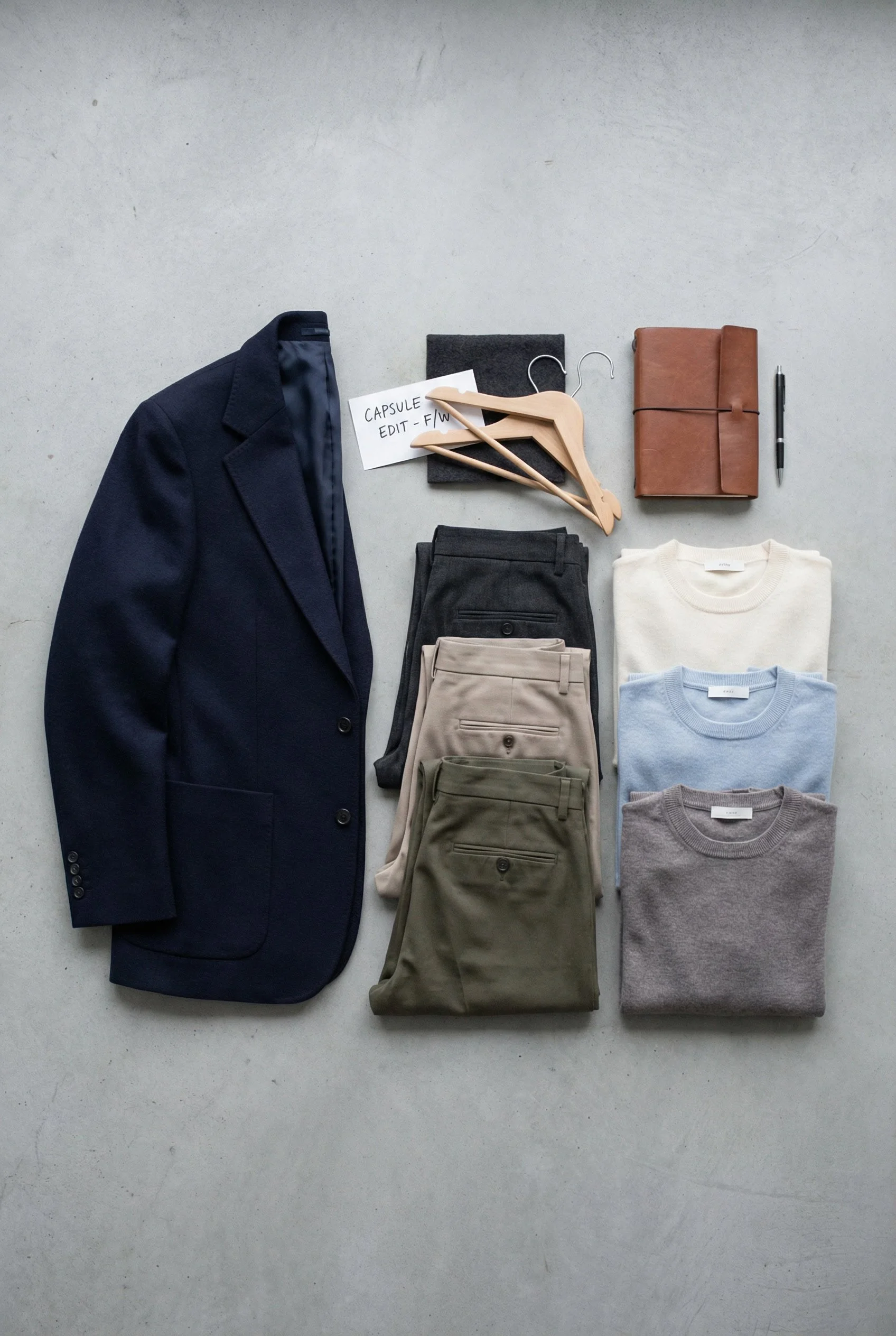
Before spacing can work, the closet needs a quiet reset. This step is not about aggressive decluttering but about removing visual noise and keeping what feels aligned.
Lay pieces out, observe them, and notice what feels cohesive. Pieces that disrupt the palette or silhouette tend to reveal themselves quickly when seen together.


Step Two: Standardize Your Hangers
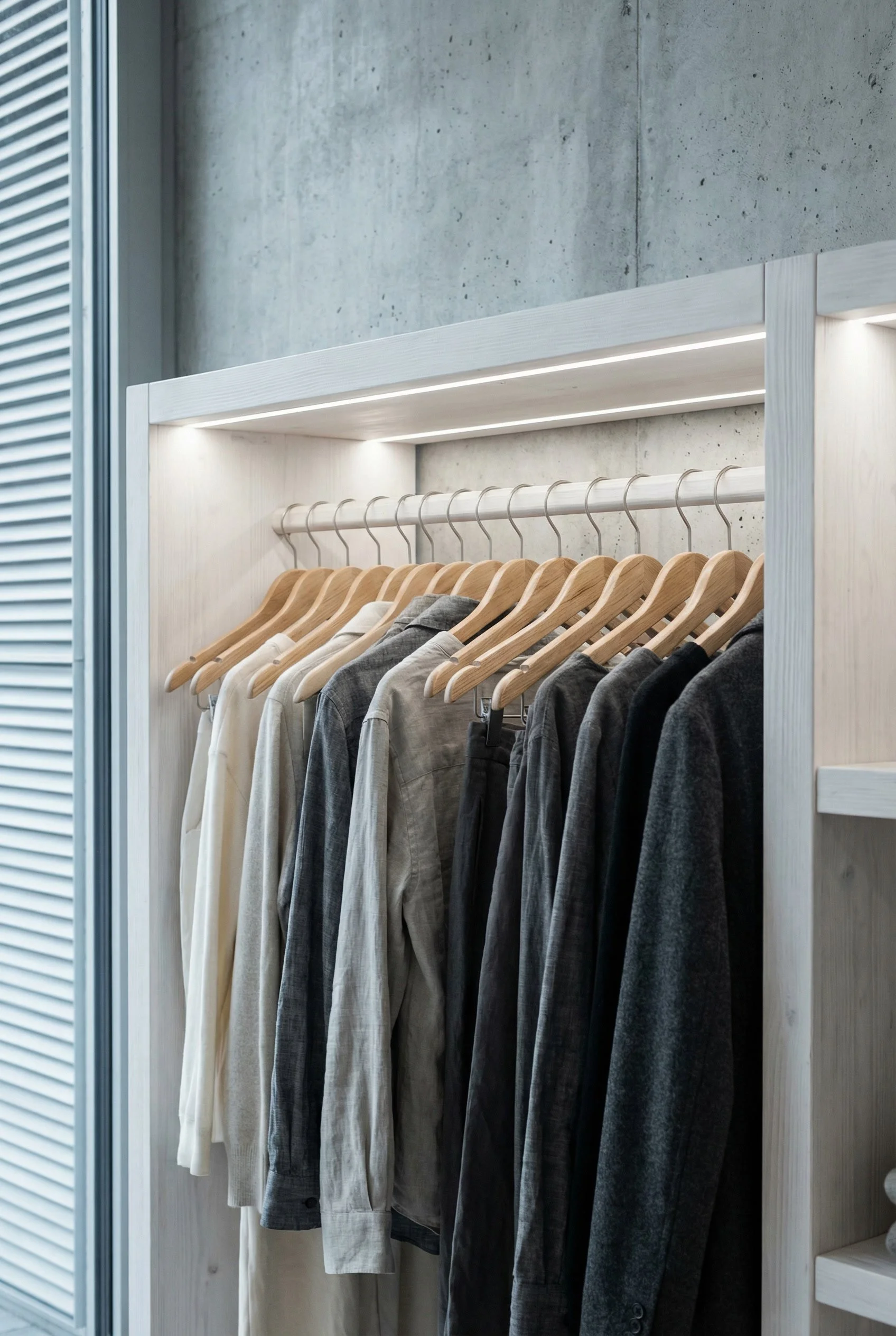
The structure of a closet is defined as much by what holds the clothing as by the clothing itself. Mismatched hangers interrupt visual flow and create unnecessary density.
Switching to uniform hangers creates a continuous line, allowing garments to appear lighter and more refined.


Step Three: Rebuild the Closet by Category, Not Habit
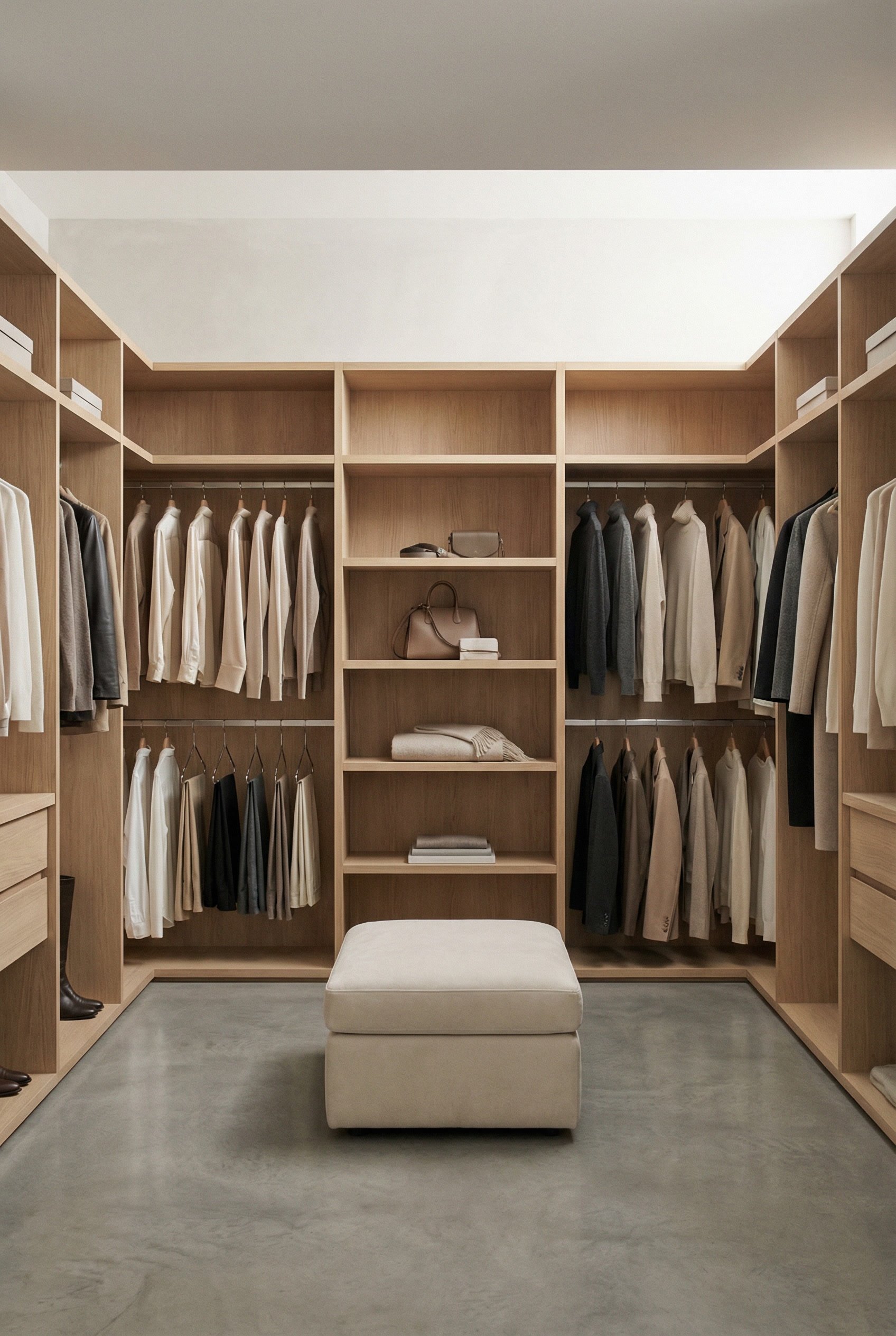
Instead of placing items randomly, rebuild your closet with intention. Categories create visual order and allow your eye to move naturally through the space.
Grouping similar items together reveals patterns — in color, fabric, and silhouette — that help you dress more intuitively.



Step Four: Introduce Negative Space Intentionally
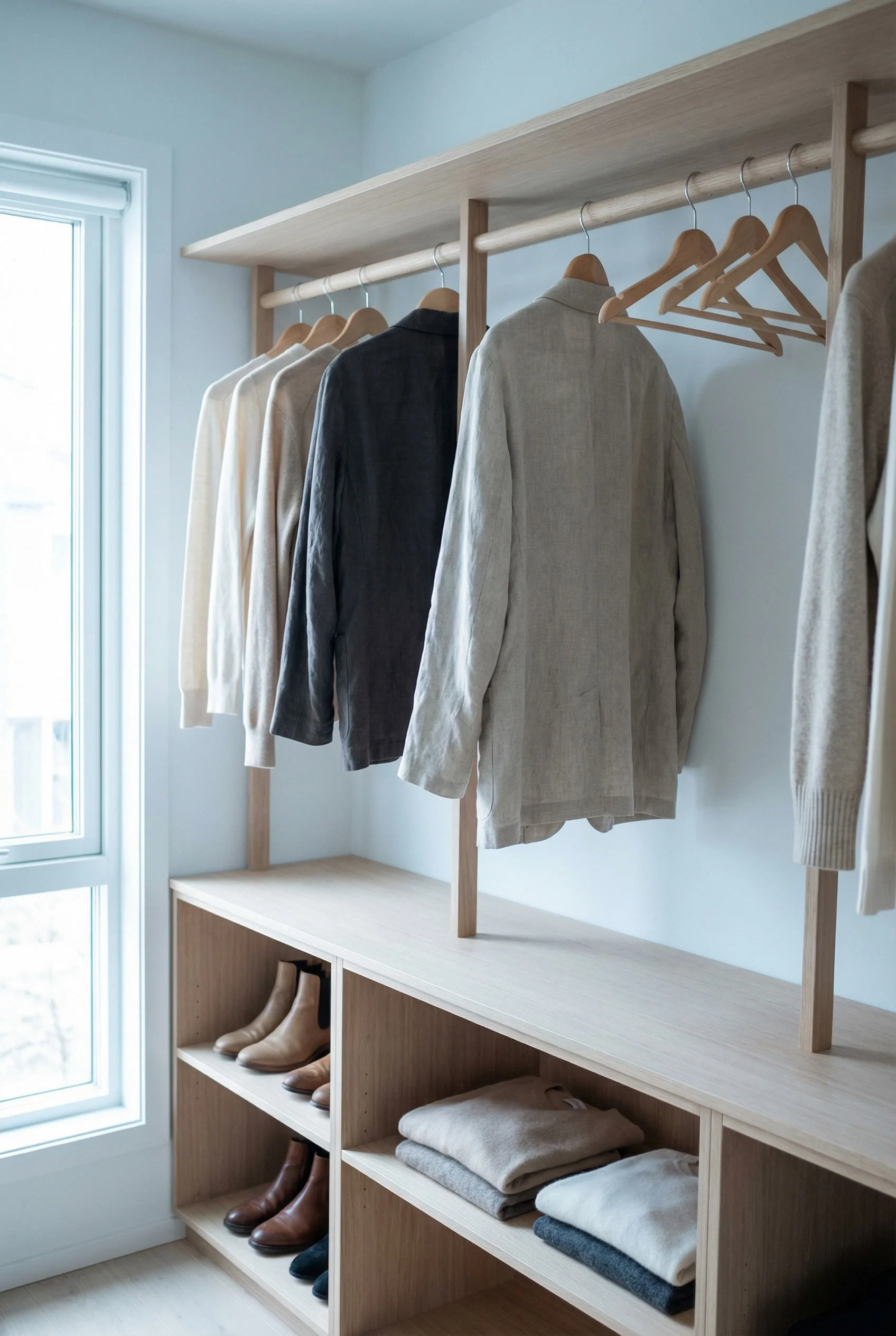
Leaving space inside a small closet may feel counterintuitive, but it is the element that creates the strongest visual transformation.
Negative space allows each piece to stand on its own, giving even simple garments a sense of structure and presence.

Step Five: Elevate One Visible Detail
A small, intentional detail gives the closet a finished, editorial quality. It anchors the space without overwhelming it.
This detail should feel natural — as if it belongs — not decorative for the sake of decoration.



Why This Works — Psychologically and Visually
This approach shifts your wardrobe from storage to presentation. It reduces friction, increases visibility, and creates a sense of quiet control over your space.
You begin to dress with more intention, not because you have more options, but because you can finally see them.

A small closet does not need expansion to feel new. It needs structure, spacing, and clarity.
When each piece is given room to exist, your wardrobe transforms into something closer to a curated edit than a collection of items.
And in that shift, everything begins to feel — quietly, effortlessly — new.
