

SMALL APARTMENT ORGANIZATION: HOW TO MAKE LIMITED SPACE FEEL CALM, FUNCTIONAL, AND BEAUTIFUL
There is something deeply satisfying about solving a real problem — especially one that quietly affects people every single day.
Small apartments are one of those problems. They’re not inherently bad. In fact, many of the most beautiful homes in Europe and Scandinavia are compact by design. The issue isn’t the size — it’s how the space is organized, furnished, and expected to function.
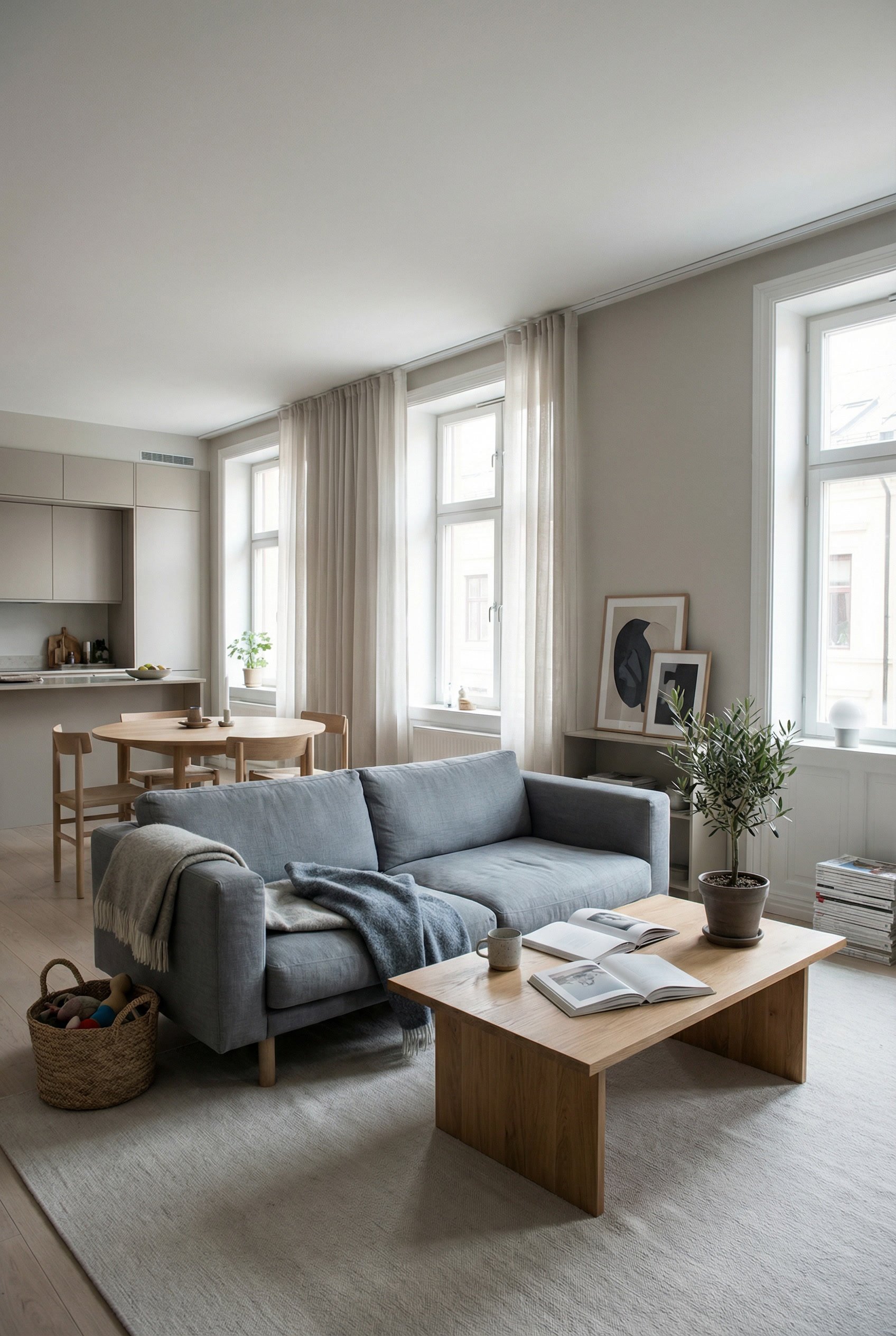
WHAT MINIMALISM LOOKS LIKE IN 2026
Minimalism in 2026 has evolved. While the core principles remain — clarity, restraint, intentionality — the visual language has softened significantly. The stark, high-contrast minimalism of previous years is being replaced by interiors that are warmer, more tactile, and designed to support everyday living rather than visual impact alone.

WHAT TO BUY ONCE AND KEEP FOR YEARS
In a culture built on constant upgrades, buying something once and keeping it for years has become rare. Most purchases today are made quickly, replaced often, and managed continuously. Over time, this creates clutter, decision fatigue, and repeated spending without a sense of completion.

HOW TO SHOP LESS WITHOUT FEELING DEPRIVED
Reducing shopping habits is often framed as a discipline problem. Spend less. Buy less. Resist temptation.
In reality, people who successfully shop less are not more disciplined — they are more intentional.

A STYLIST’S 5-STEP CLOSET DECLUTTER THAT ACTUALLY WORKS (WITHOUT STARTING OVER)
There is a specific kind of frustration that comes from a full closet that still doesn’t deliver: you own plenty, yet nothing feels right. Most of the time, the problem is not your taste. It’s that your wardrobe has lost its structure.

THE REAL COST OF BUYING THINGS YOU DON’T USE
Most people assume the cost of an unused purchase is limited to its price tag. A jacket that still has the label on it. A kitchen appliance used once. A book bought with good intentions and never opened.