
PARISIAN INTERIOR DESIGN: TIMELESS ELEGANCE WITH EFFORTLESS CHARM
There is a quiet romance at the heart of Parisian interiors — an elegance so effortless it feels instinctive, almost like breathing. These are not spaces created to impress at first glance. They aren’t glossy, overly styled, or frozen in perfection. Instead, they feel lived-in, intimate, and deeply personal, shaped over time rather than assembled all at once.
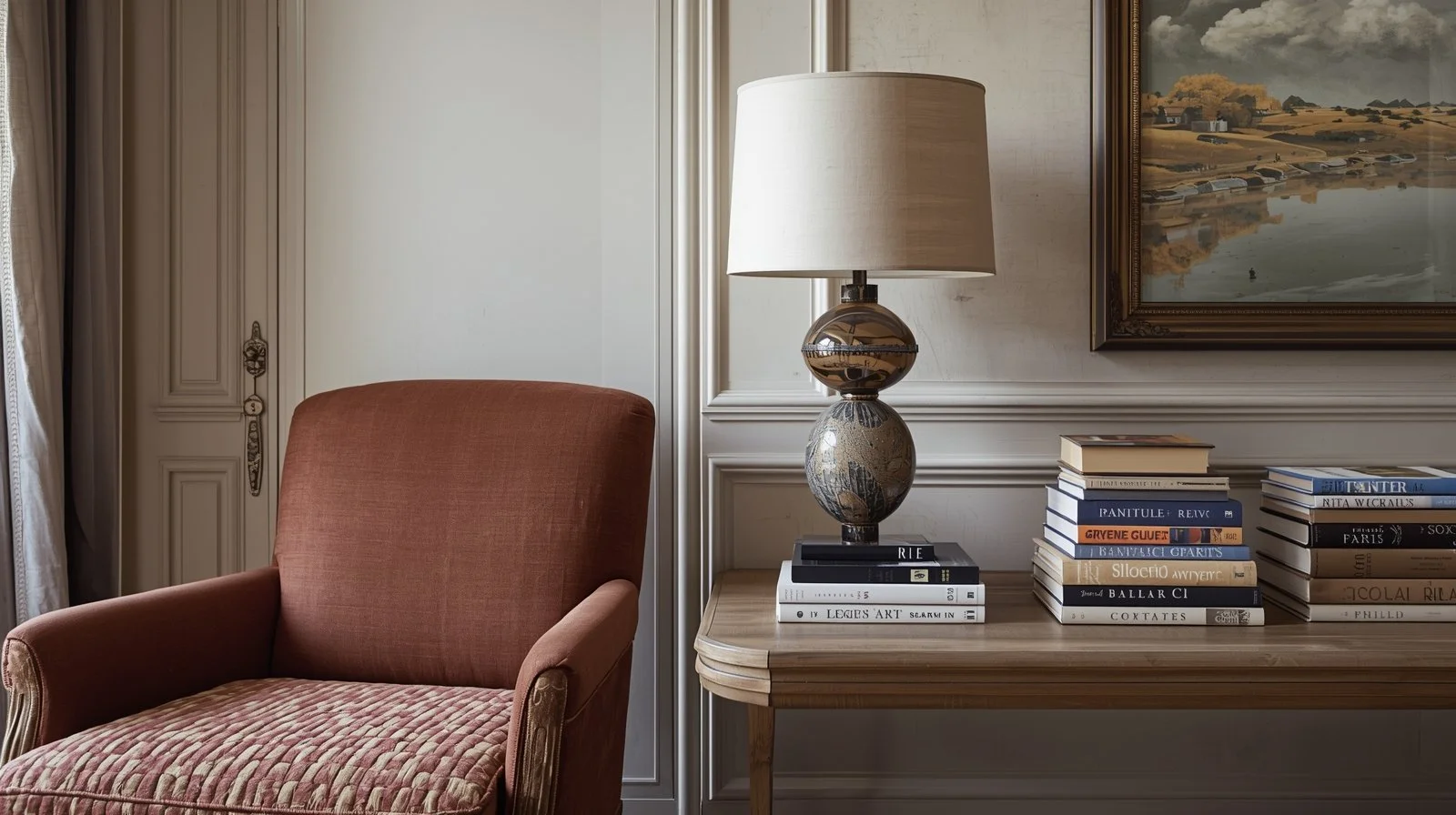
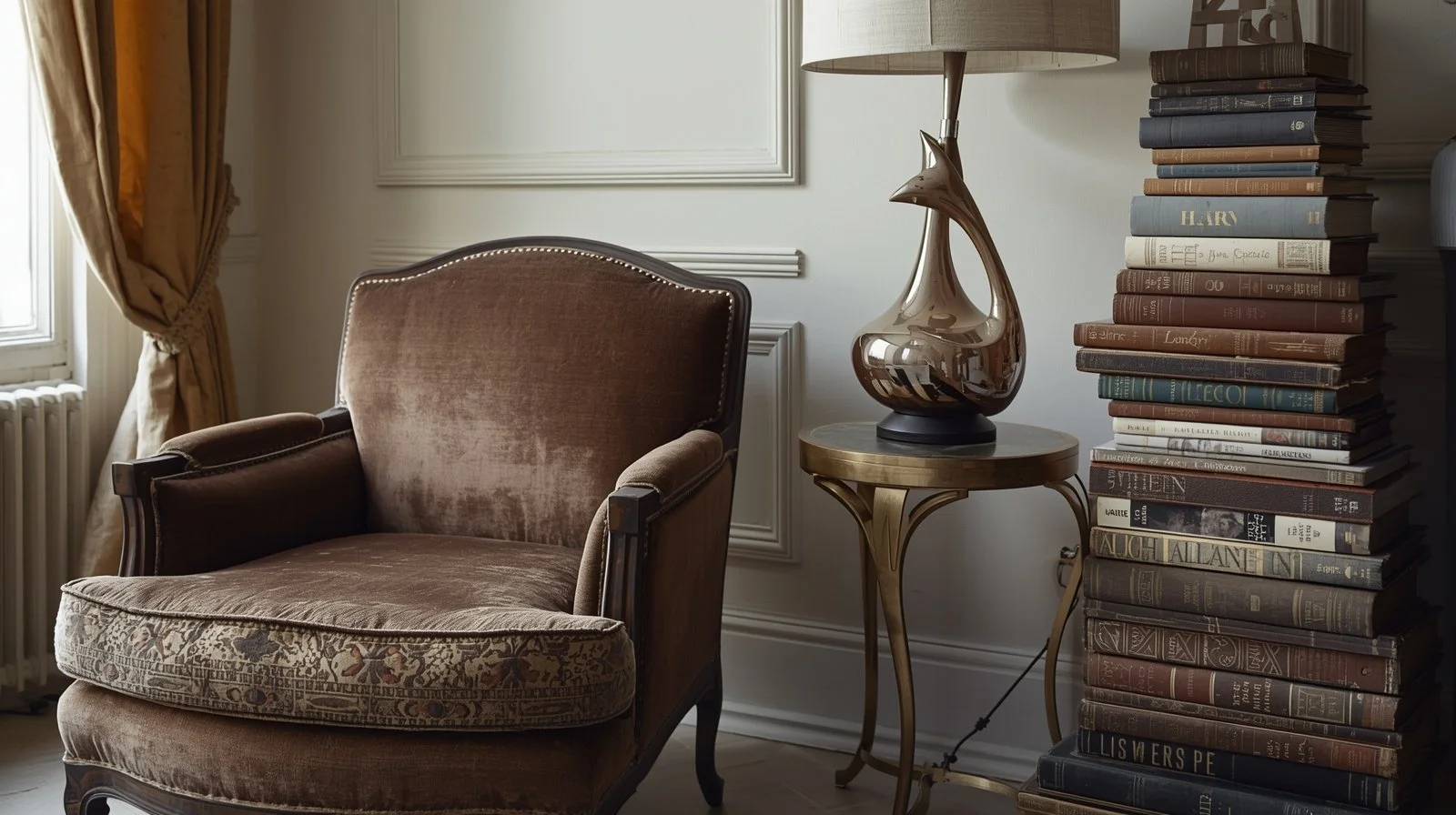
A Parisian home tells its story through layers. Each piece carries a sense of history, whether inherited, discovered, or slowly collected. A marble-topped table bears the marks of age. An antique chair shows the soft wear of decades of use. A contemporary lamp rests casually above a stack of well-loved books. Nothing feels too precious, yet everything feels considered. This balance — between old and new, refined and relaxed — is what gives Parisian interiors their unmistakable soul.
Imperfection is not corrected; it’s embraced. Patina is valued. Contrast is intentional. Classical architectural details coexist with modern elements, creating spaces that feel timeless rather than trend-driven. The result is a home that feels elegant without trying, sophisticated without stiffness.
Whether your space is a historic apartment or a modern home, Parisian interior design is less about replication and more about sensibility. It’s an invitation to slow down, to layer thoughtfully, and to curate with emotion rather than rules. One soft texture, one meaningful object, one artful contrast at a time, the quiet magic of Paris can be woven into any home.







The Soul of Parisian Design
Parisian interiors are guided by feeling rather than formula. While deeply rooted in tradition, they remain personal and fluid — shaped slowly through memories, collected objects, and the quiet rituals of everyday life.
This style lives in contrast. Old pieces sit comfortably beside new ones. Ornate details share space with clean, modern lines. Soft textiles soften the coolness of marble, while rough, timeworn wood is balanced by the glow of polished brass. These juxtapositions feel natural rather than styled, creating spaces that are rich in tension yet effortless in spirit.
In a world that celebrates matching sets and rigid design rules, the Parisian home takes a more graceful path. It values character over perfection, charm over symmetry, and patina over polish. The result is a space that feels authentic, layered, and quietly rebellious — a home that reflects a life lived, not a look assembled.

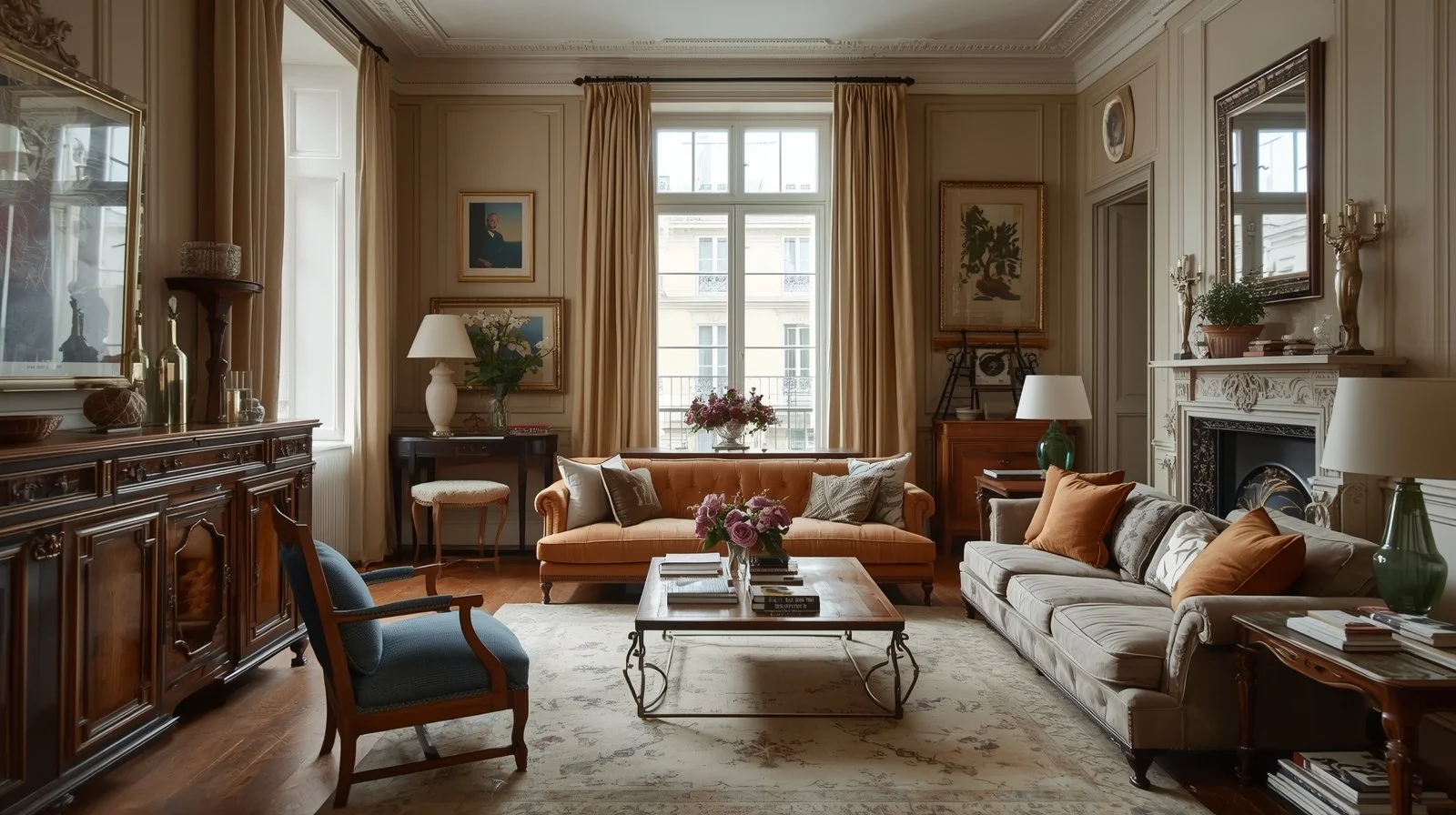
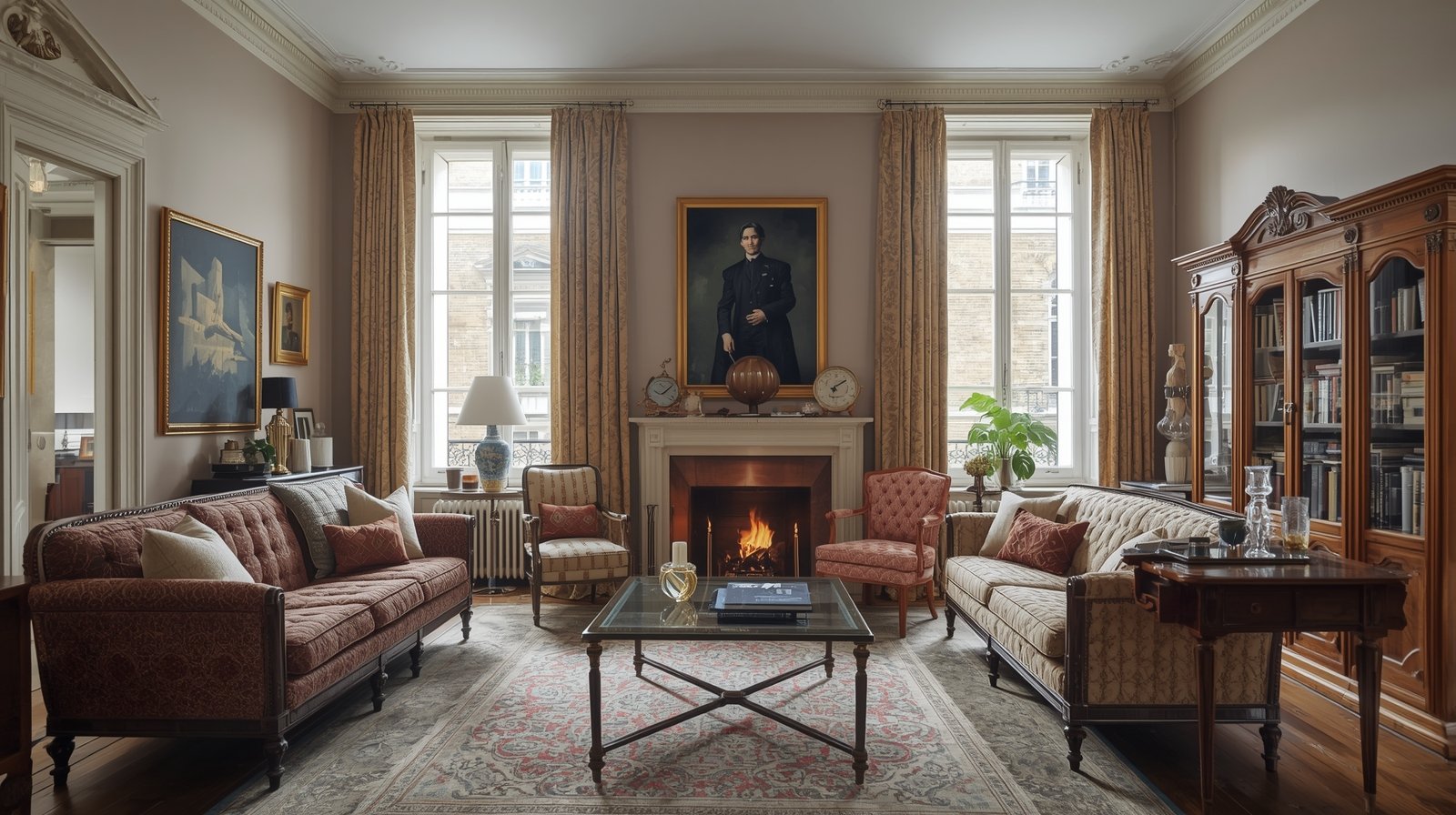
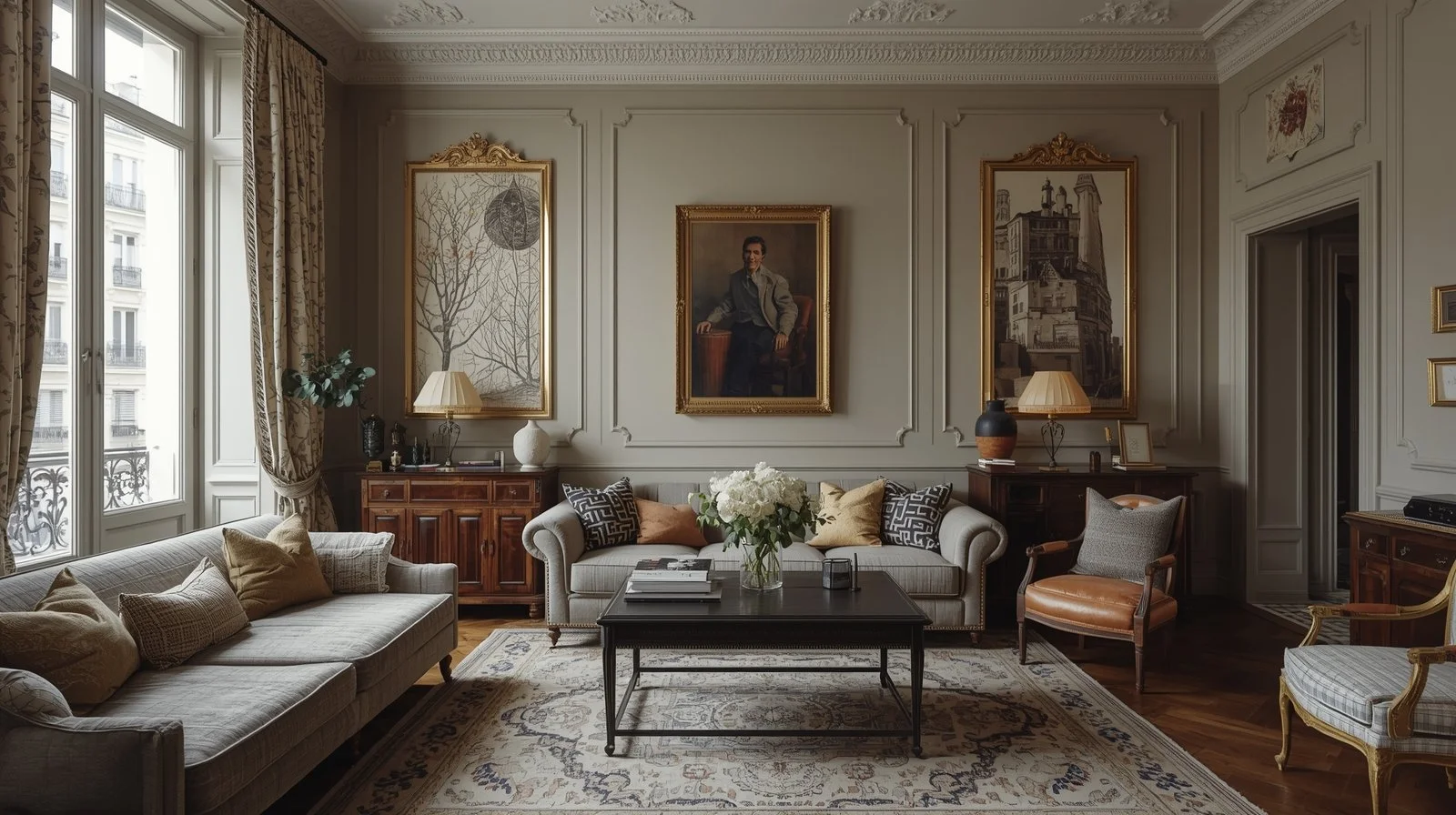
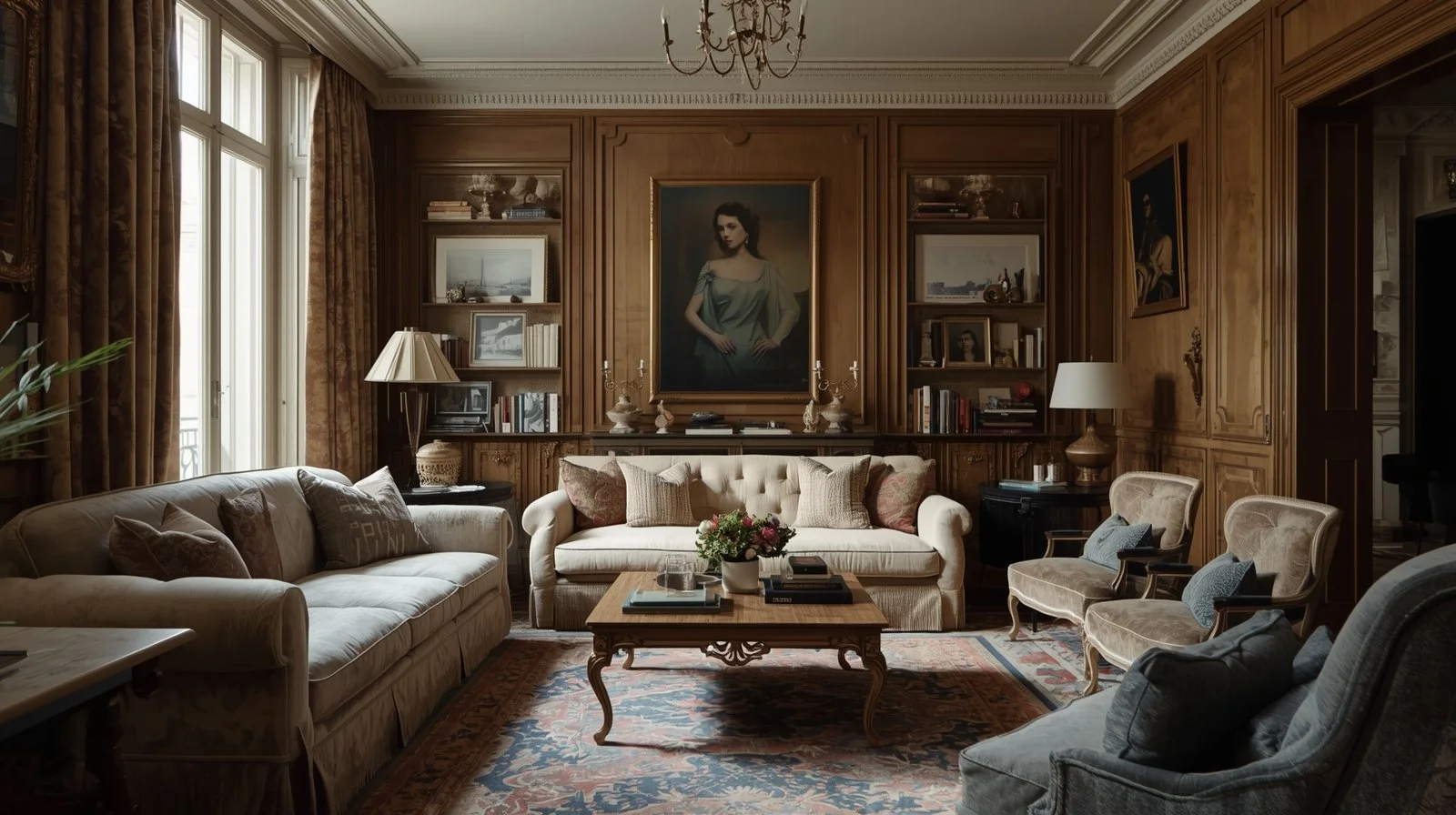
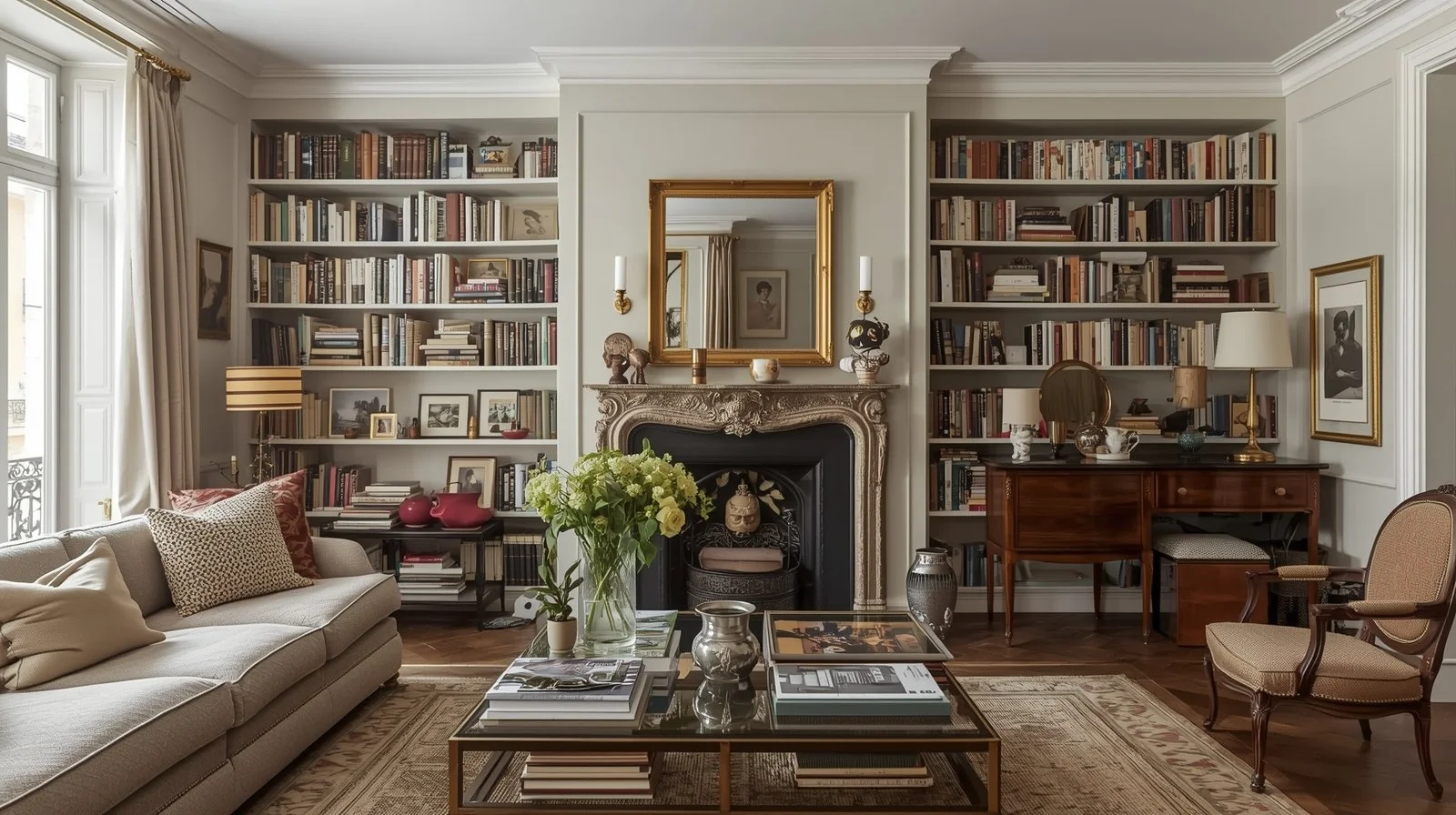
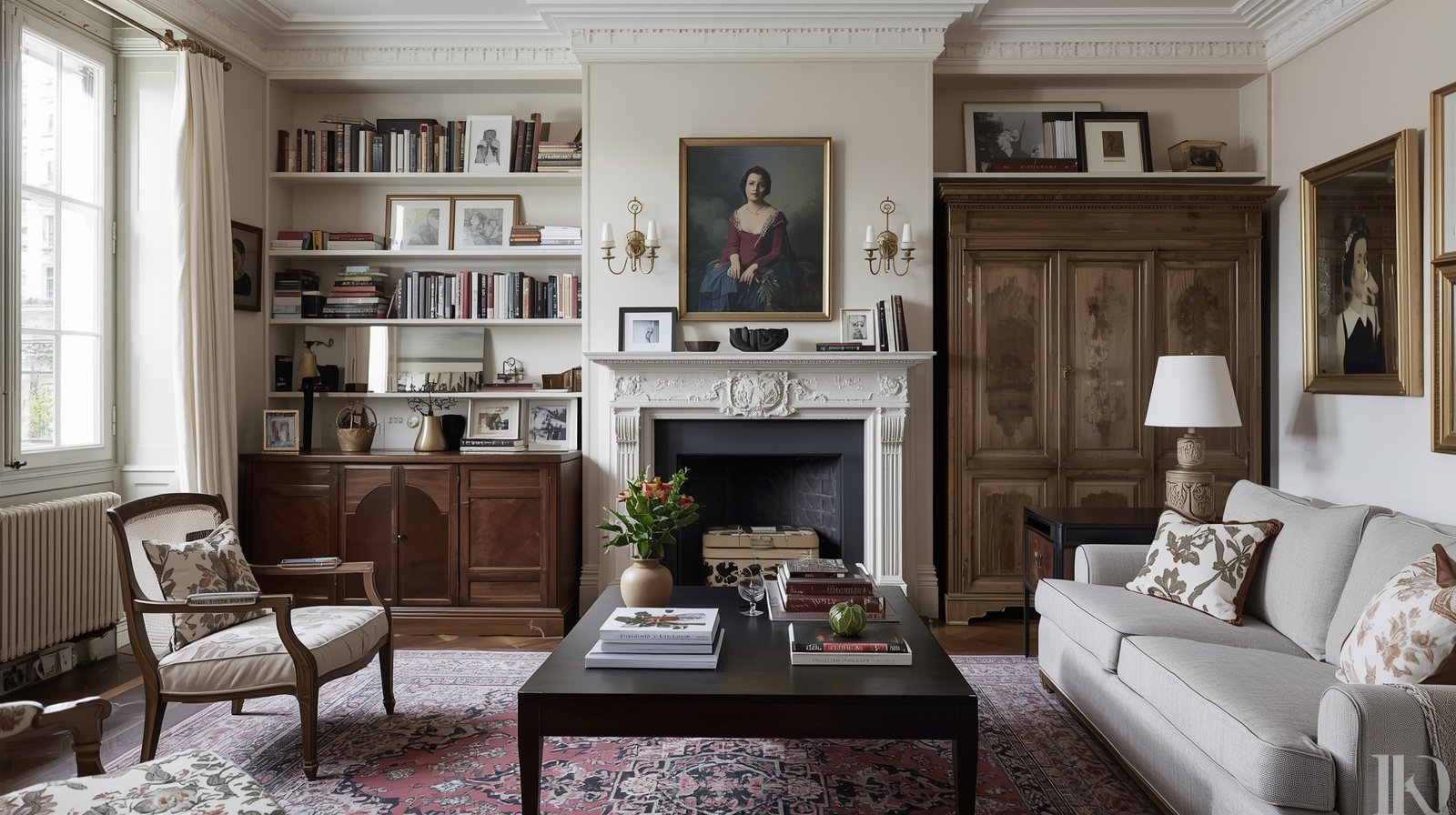


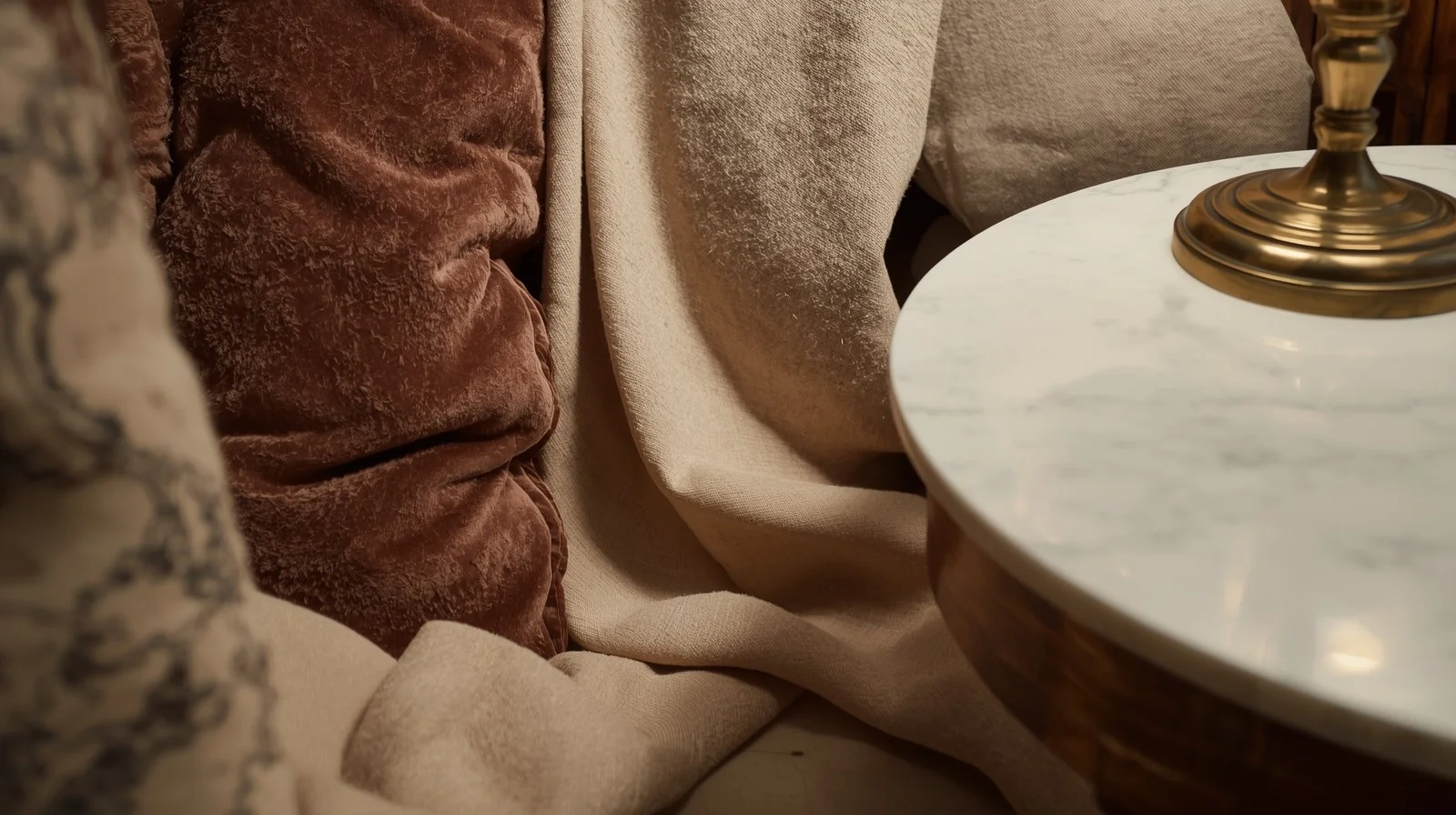

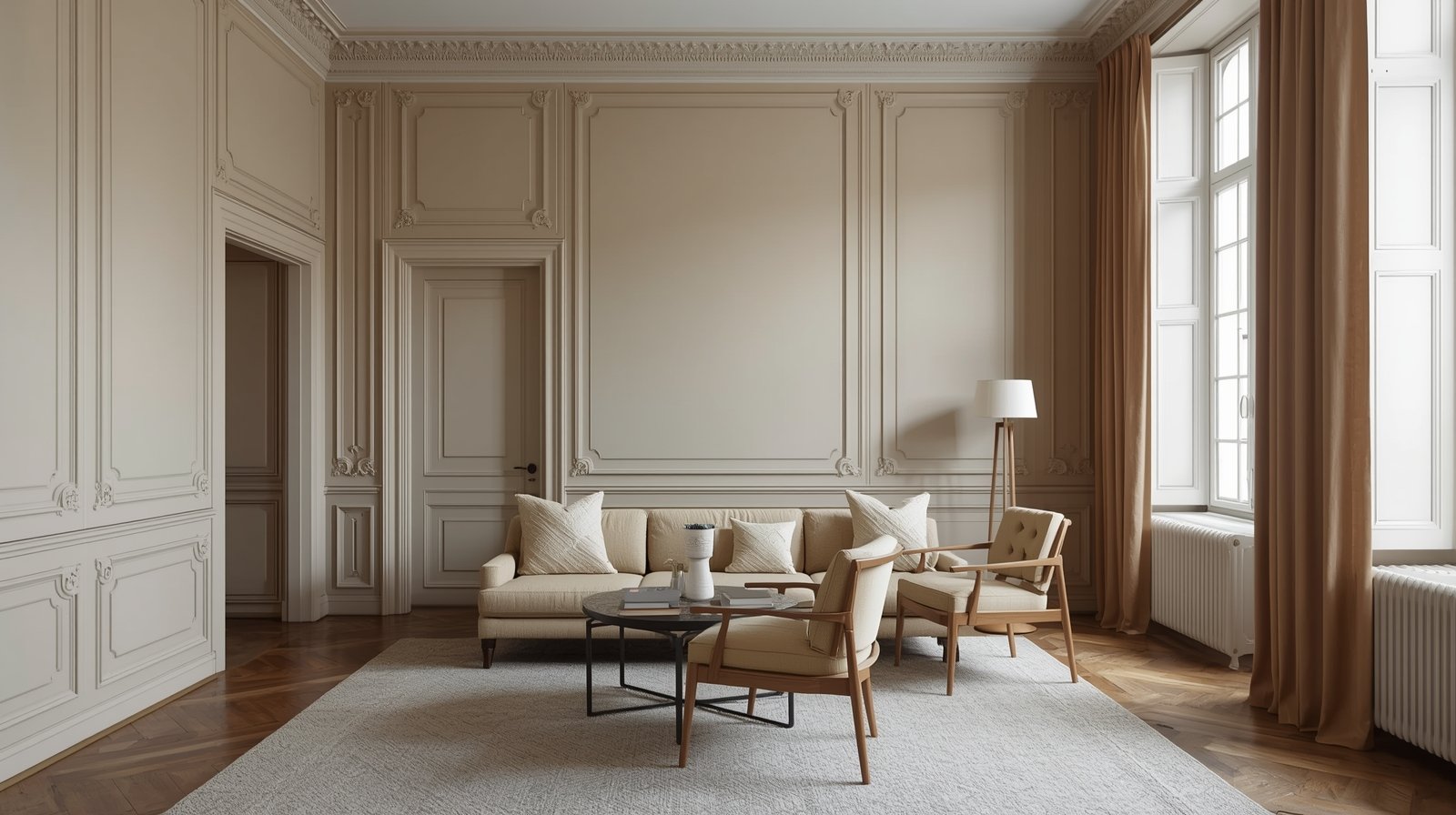
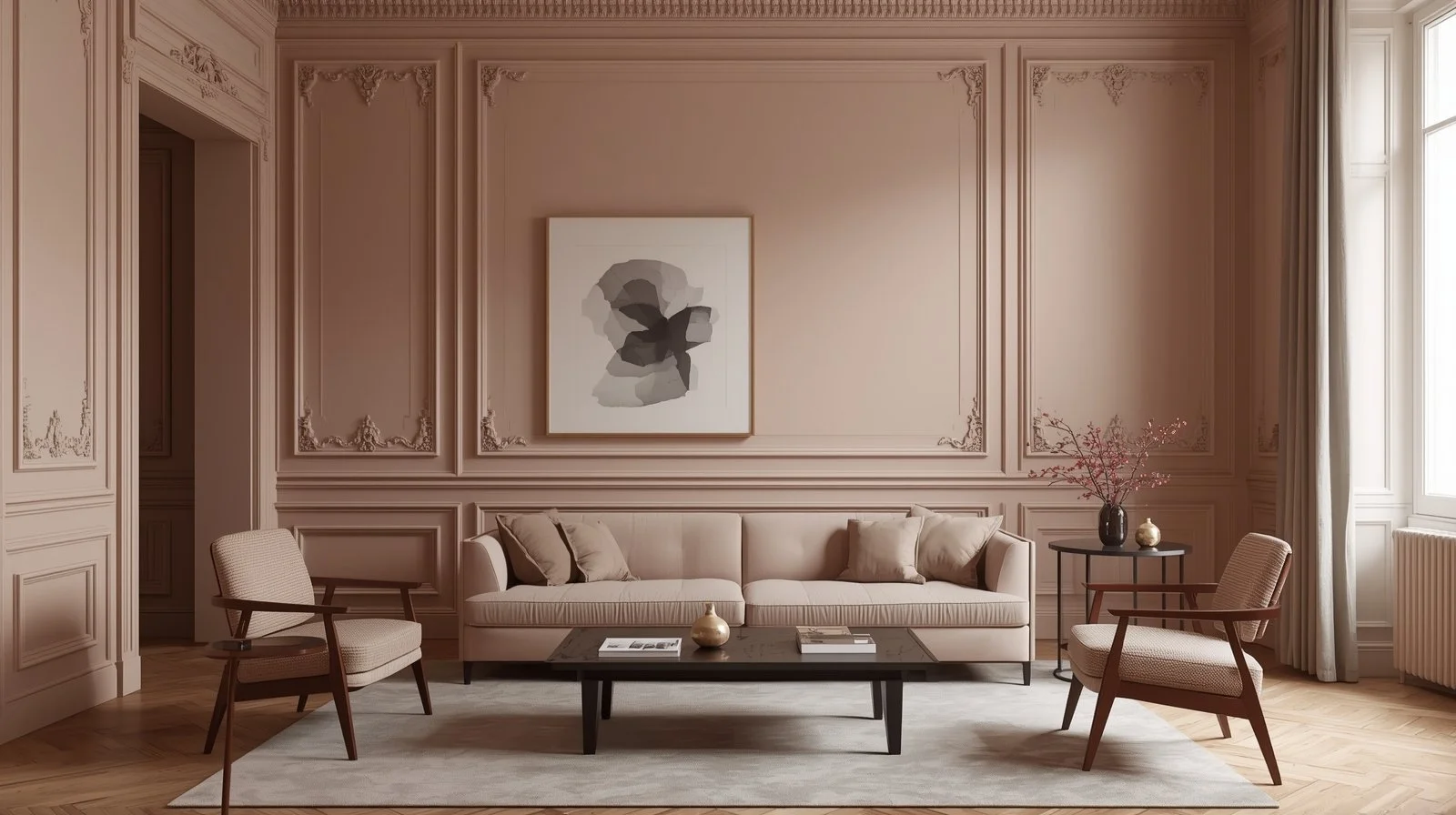
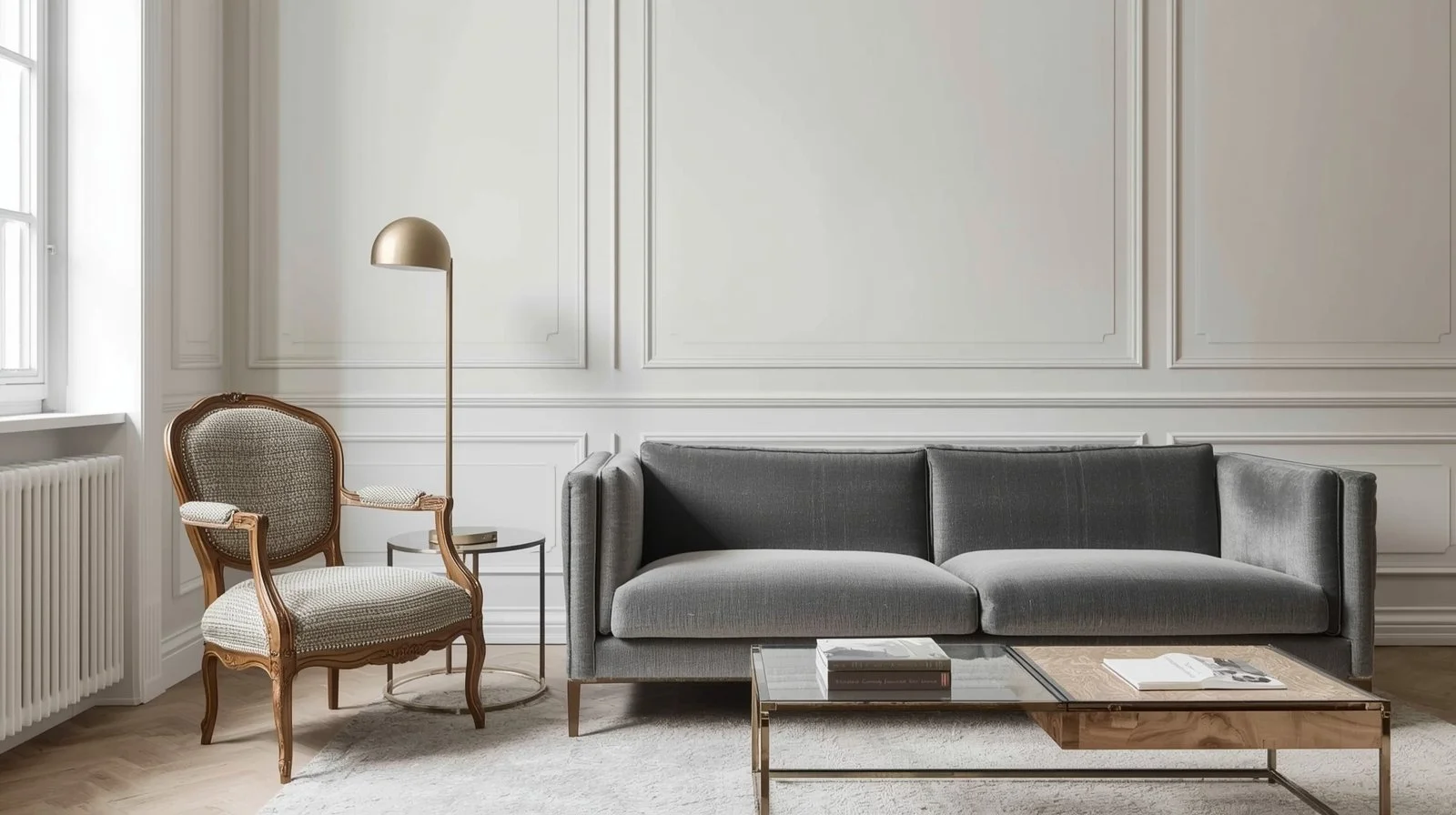

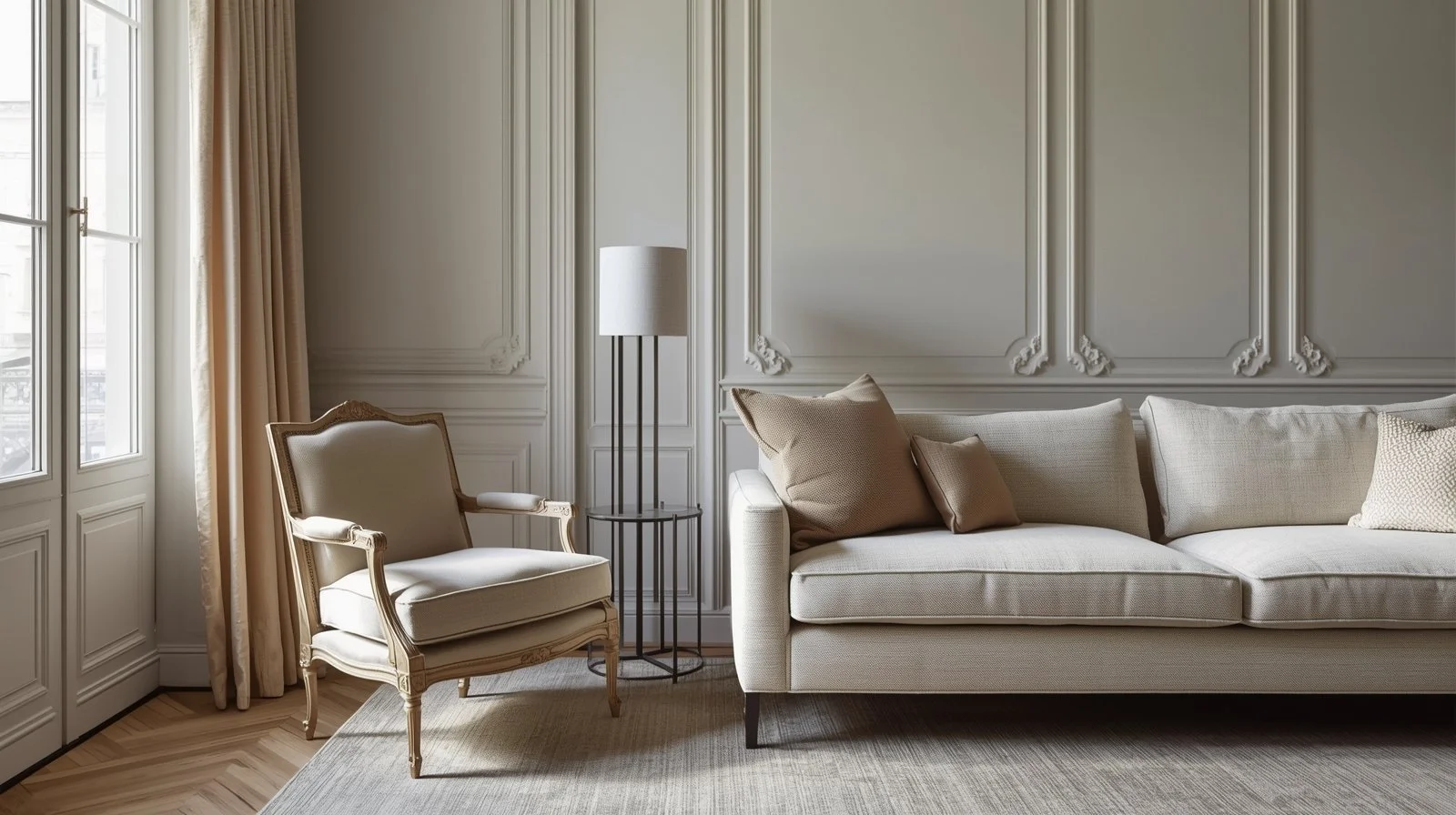
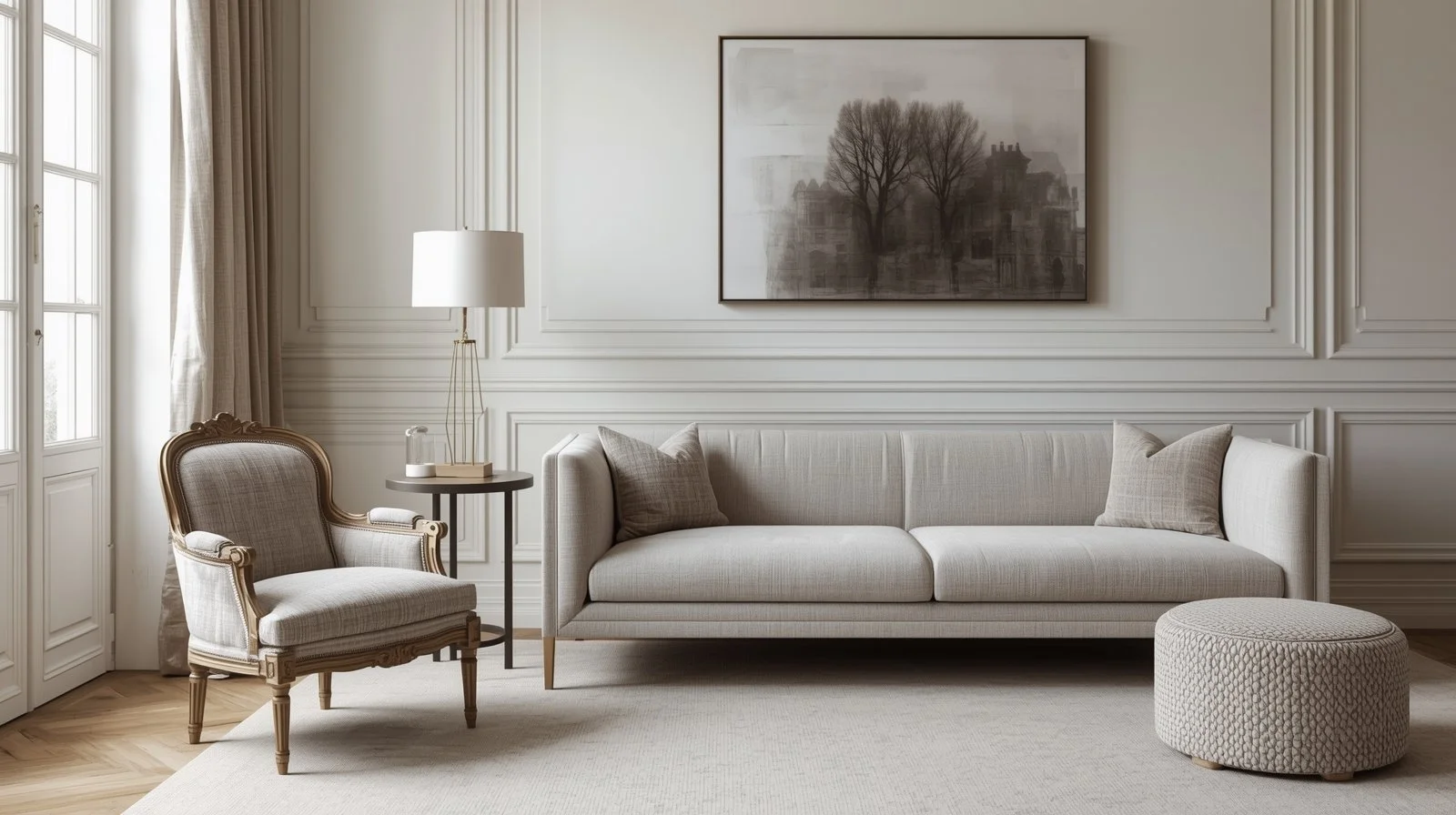
What defines the Parisian spirit
A sense of ease and laissez-faire
A refusal to over-decorate
A curated collection of things you love—no matter where they came from
A home that feels lived in, not staged
This is where minimalism meets sentimentality. Where every object has meaning, and no corner is forced.
Architectural Bones & How to Recreate Them
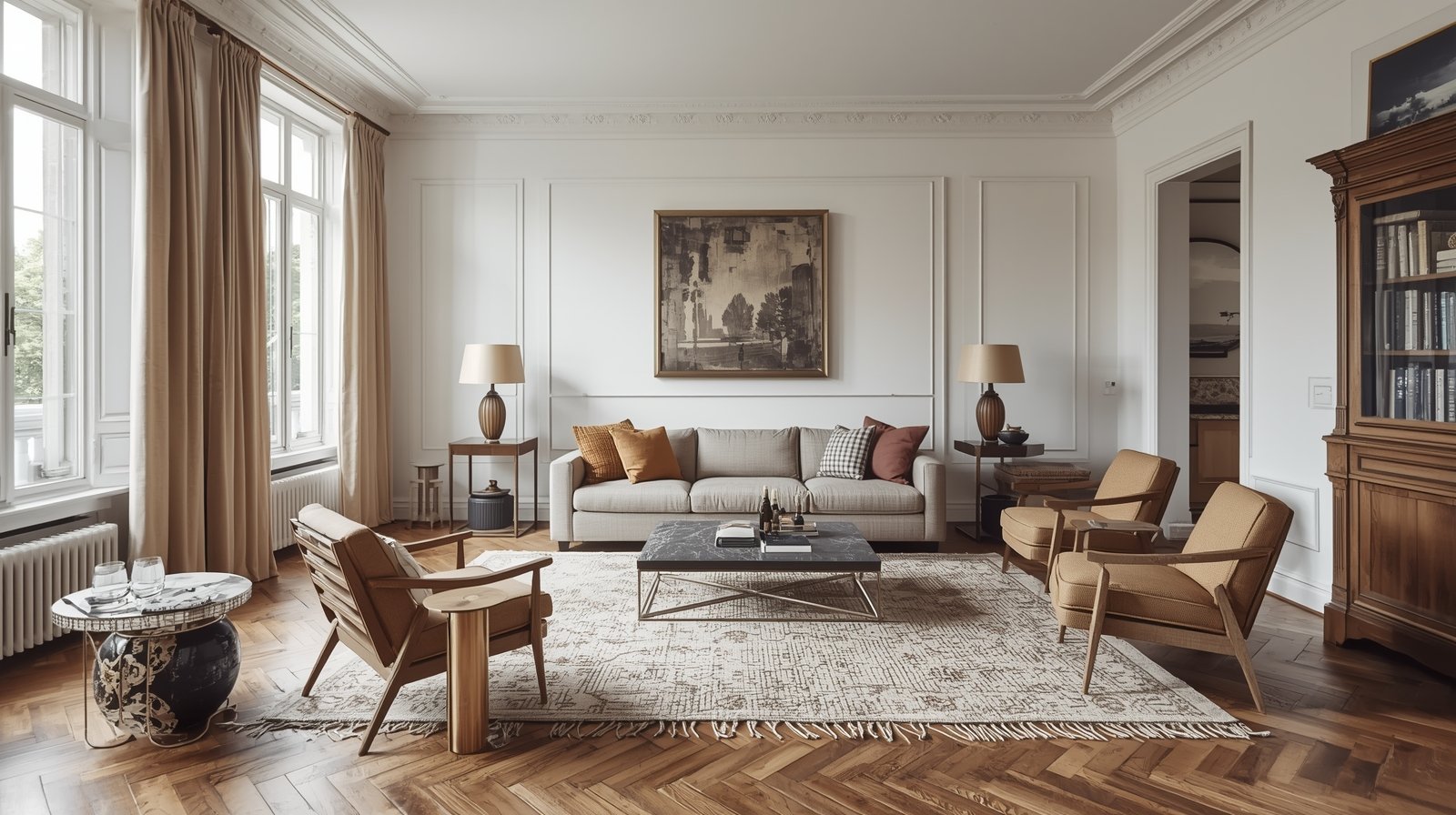
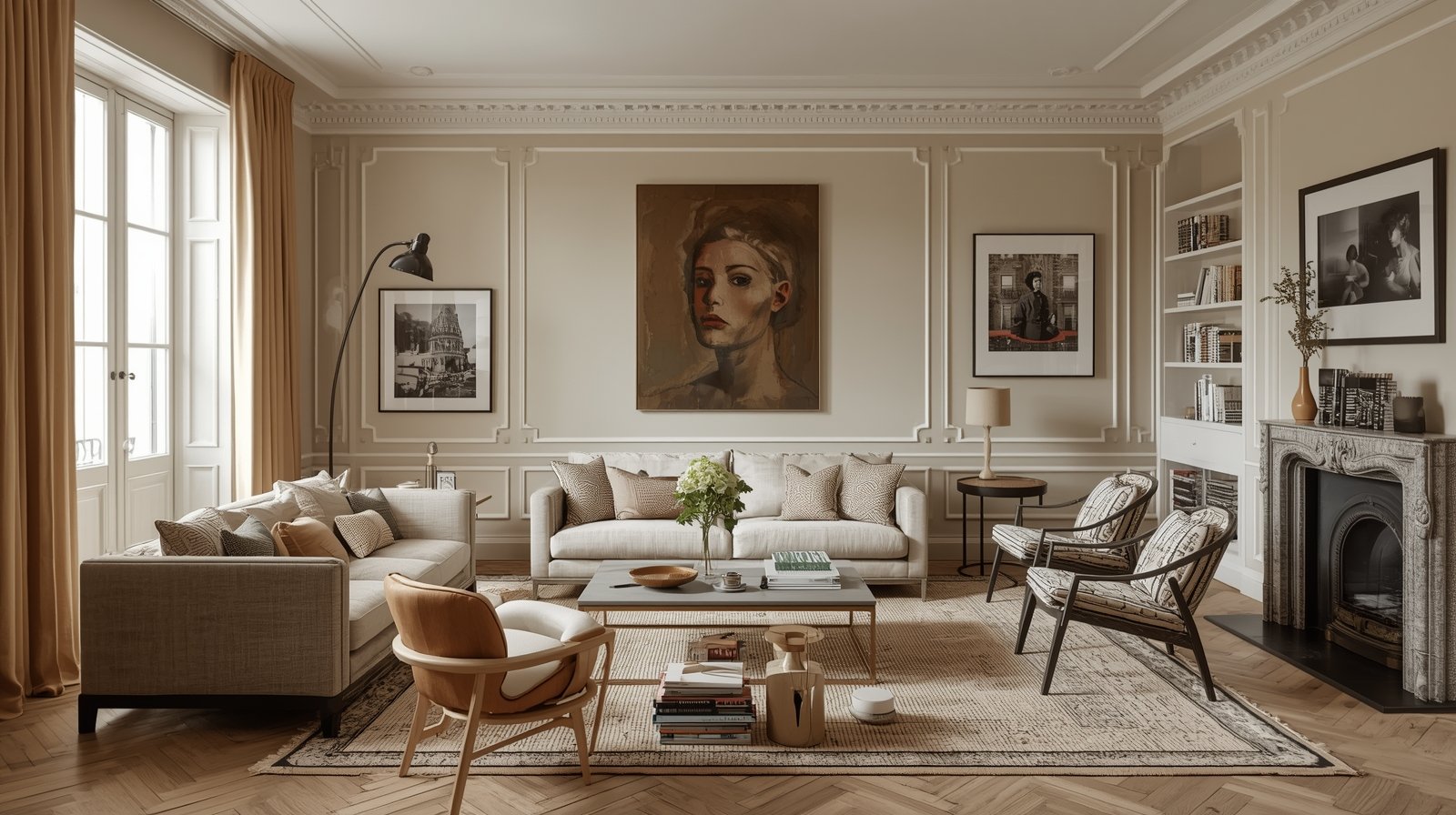
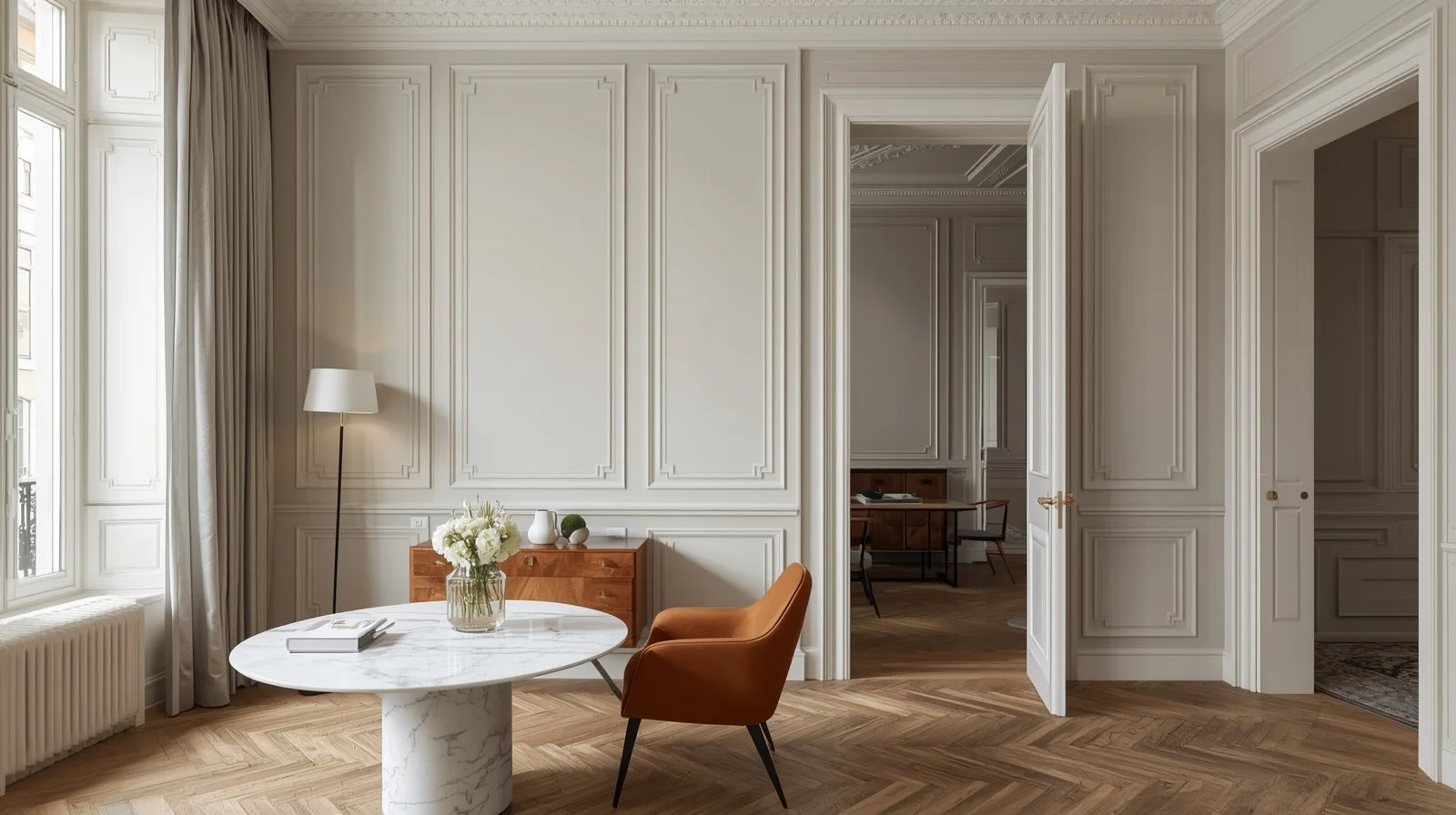
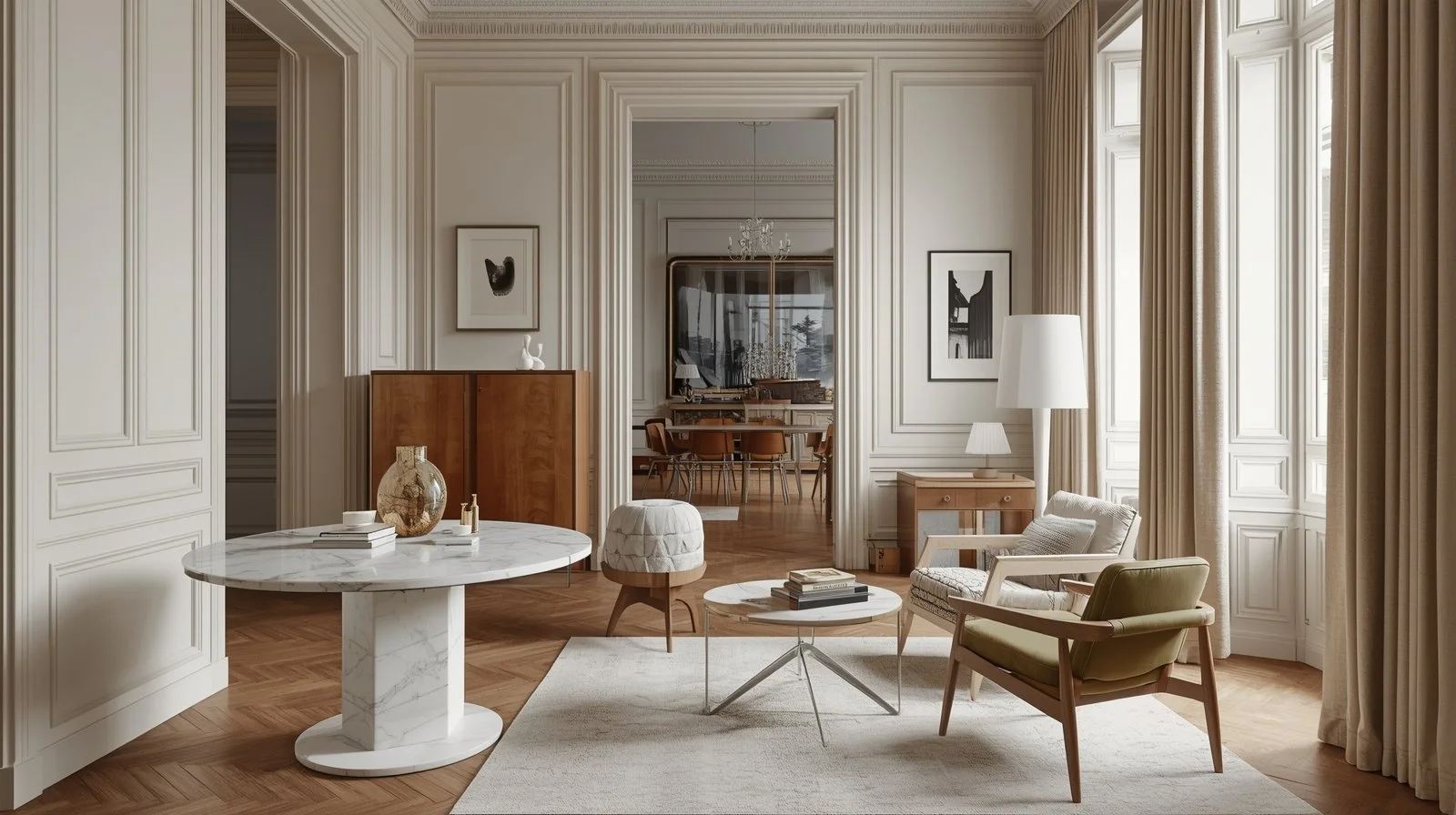
Parisian apartments are often blessed with high ceilings, intricate moldings, herringbone floors, and tall windows that open to wrought iron balconies. But you don’t need a 19th-century flat in the Marais to channel this aesthetic.
Here’s how to emulate the feel—even in a more modern or modest space.

Architectural touches to introduce:
Crown molding or wall paneling (DIY or peel-and-stick versions exist)
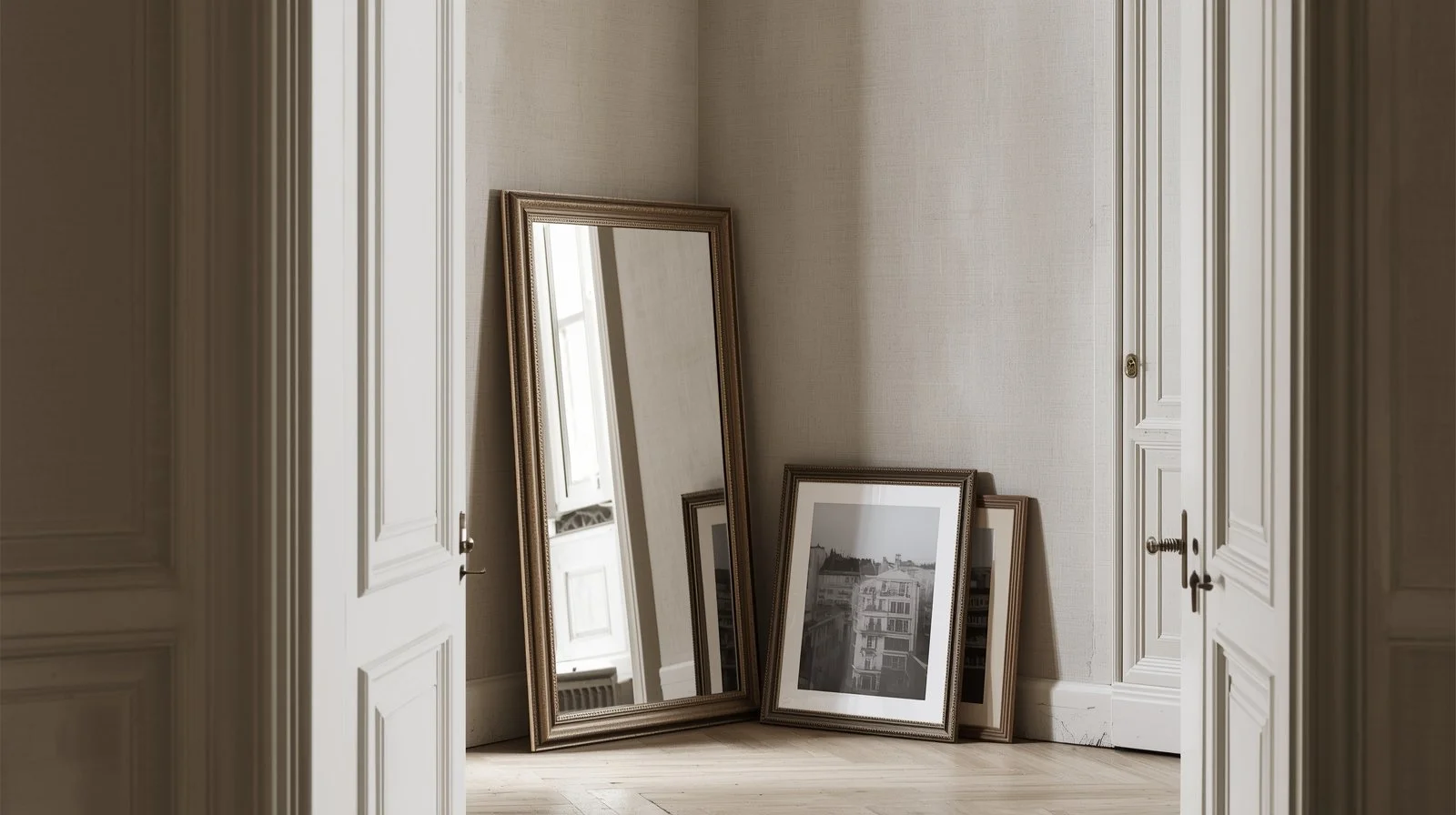
Tall mirrors with vintage-inspired frames
Antique or marble mantels (even faux versions work as a styling anchor)
Painted ceilings or high baseboards to elongate the room
Sheer linen curtains hung floor-to-ceiling to mimic Parisian light
The goal is to honor history—even if you're building your own version of it

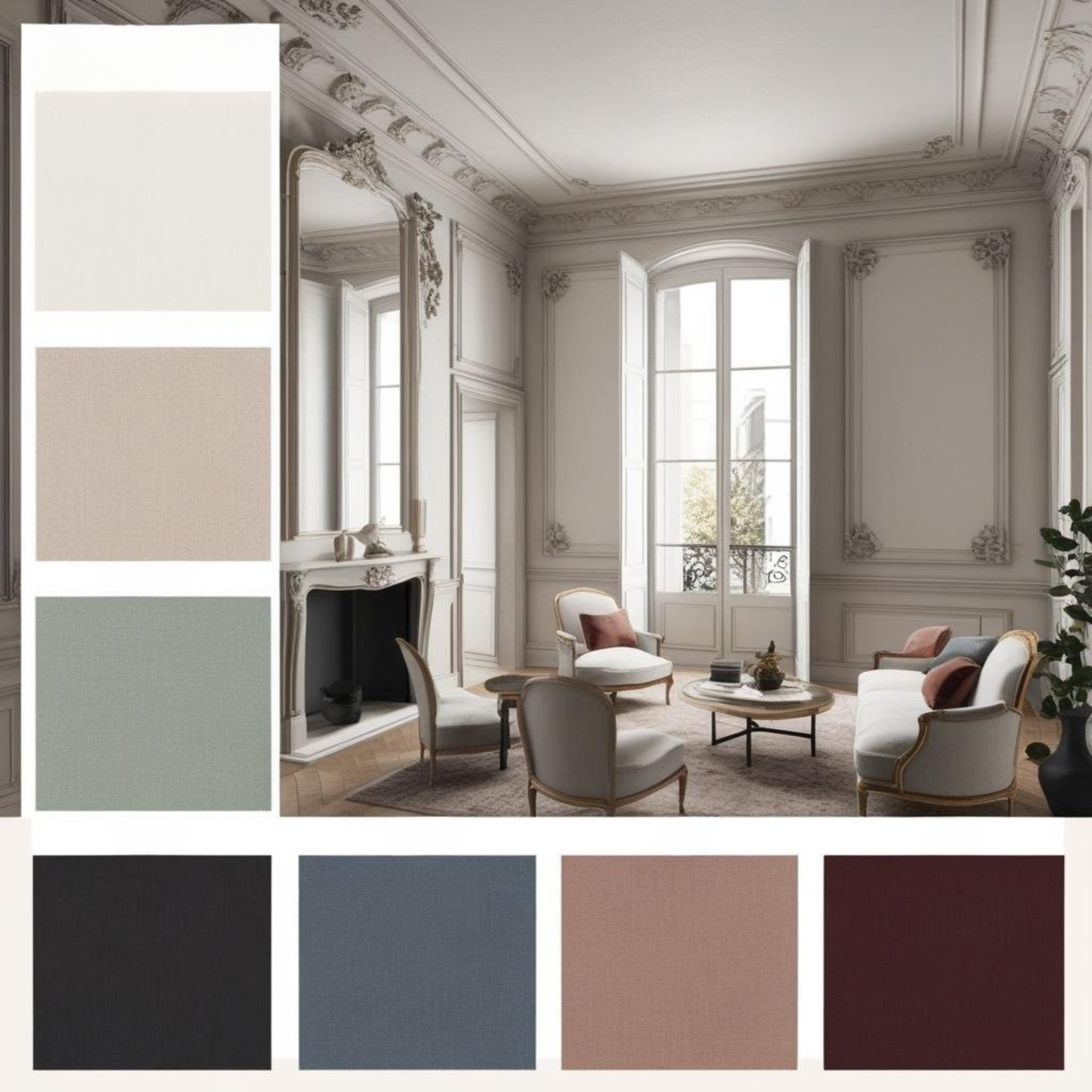
Parisian Color Palette: Muted, Moody, and Graceful
Forget bold color-blocking or overly bright tones. Parisian interiors rely on a restrained and poetic color story.
The walls are usually white or soft eggshell, creating a gallery-like backdrop. But within that quiet framework, layers of aged woods, metallic finishes, creamy linens, and muted accents give depth and richness.
Common hues:
Ivory, linen, warm white
Dove grey, putty, and clay
Hints of sage, faded blush, or blue-grey
Charcoal, black, burgundy, and antique gold to anchor
Lighting is soft and natural, never harsh. It flatters the space—and the people in it
Material & Texture Storytelling
The materials used in Parisian design tell their own stories. You’ll rarely see plastic or anything that feels mass-produced. Instead, the emphasis is on natural finishes and tactile beauty.
Key textures:
Worn leather armchairs
Brushed brass or antique gold frames
Raw silk curtains
Matte marble and aged wood
Linen everything: sofas, napkins, bed sheets
The layering of these textures adds warmth and character, making the space feel simultaneously grand and grounded
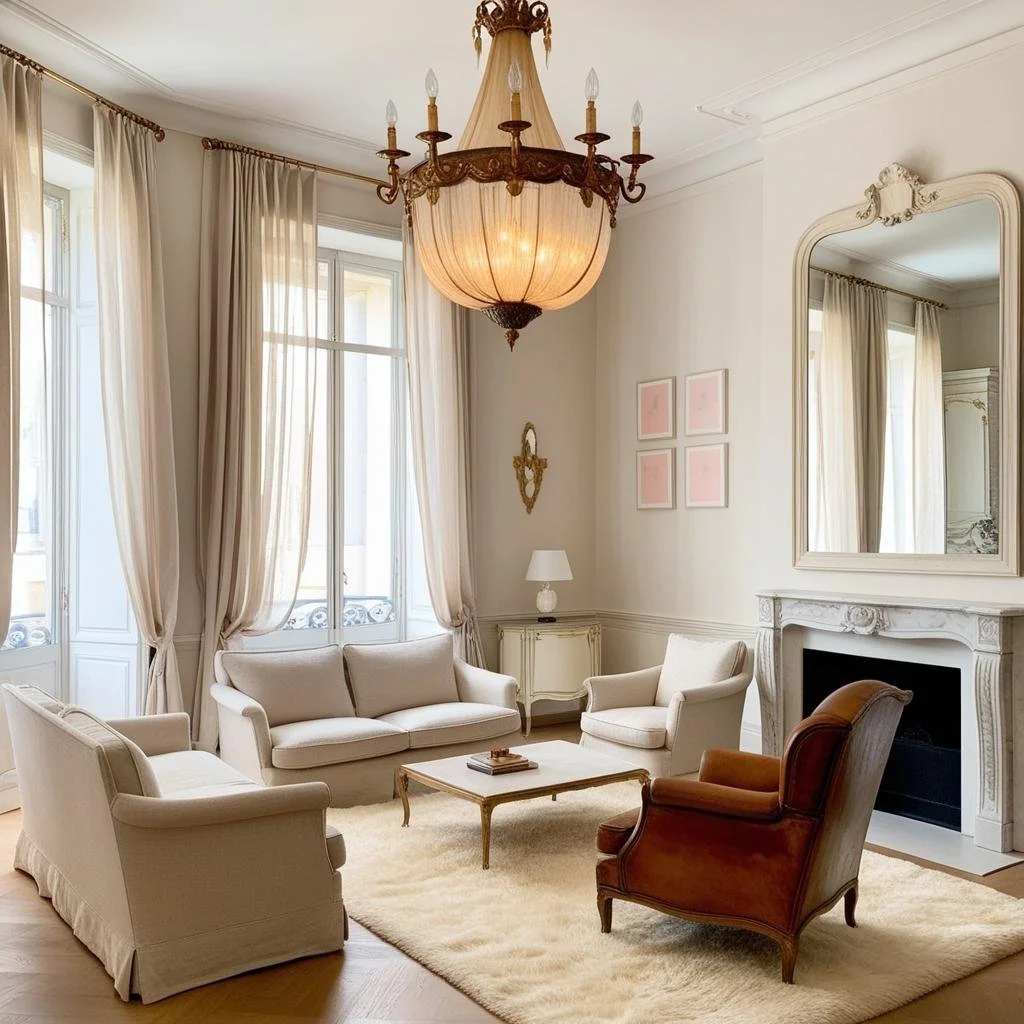

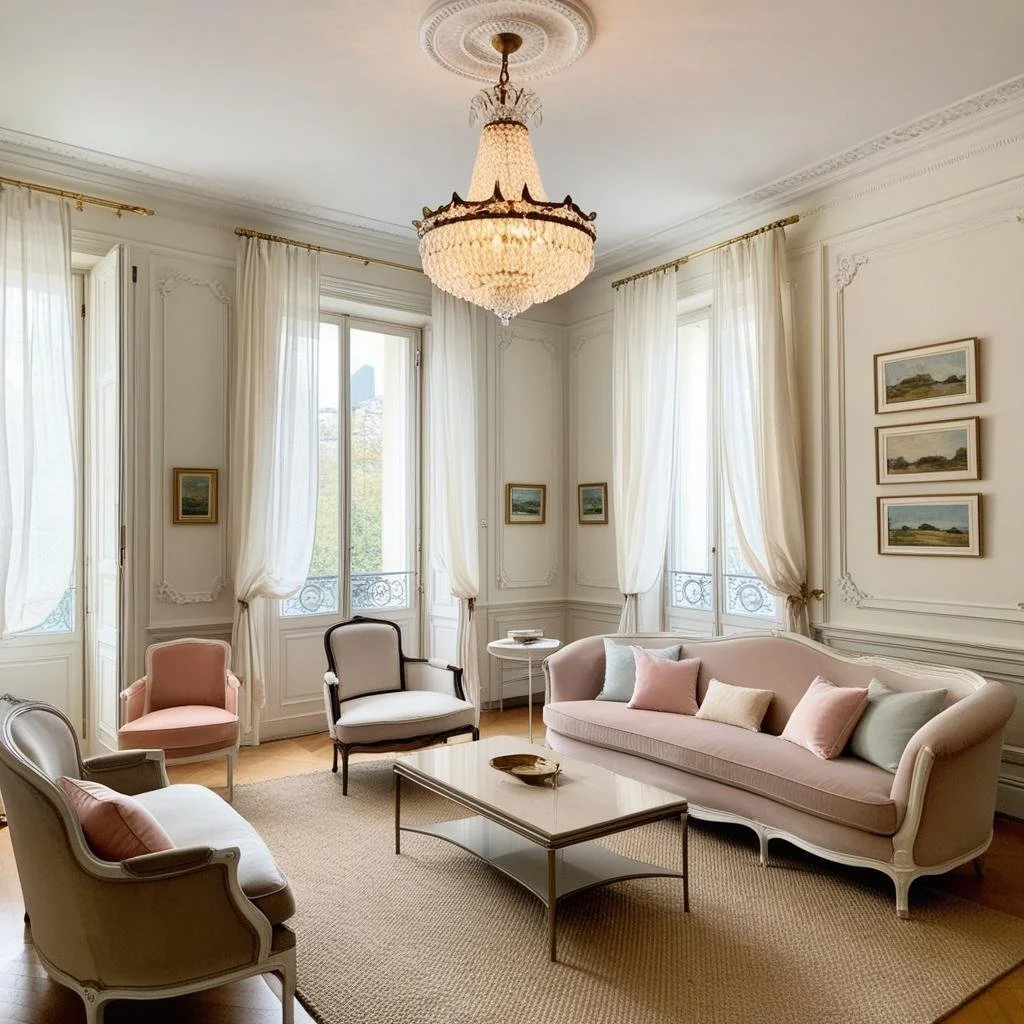
Even flaws are welcomed—a small crack in a ceramic vase, scratches on a wooden sideboard. These are signs of life, not imperfections to hide.
Furniture: Curated, Not Coordinated
There is no such thing as a “Parisian furniture set.” Instead, each piece feels as though it was discovered, not bought. A Parisian home grows organically, not all at once.
How to curate furniture like a Parisian:
To curate furniture like a Parisian, you have to think less like a decorator — and more like a collector of moments.
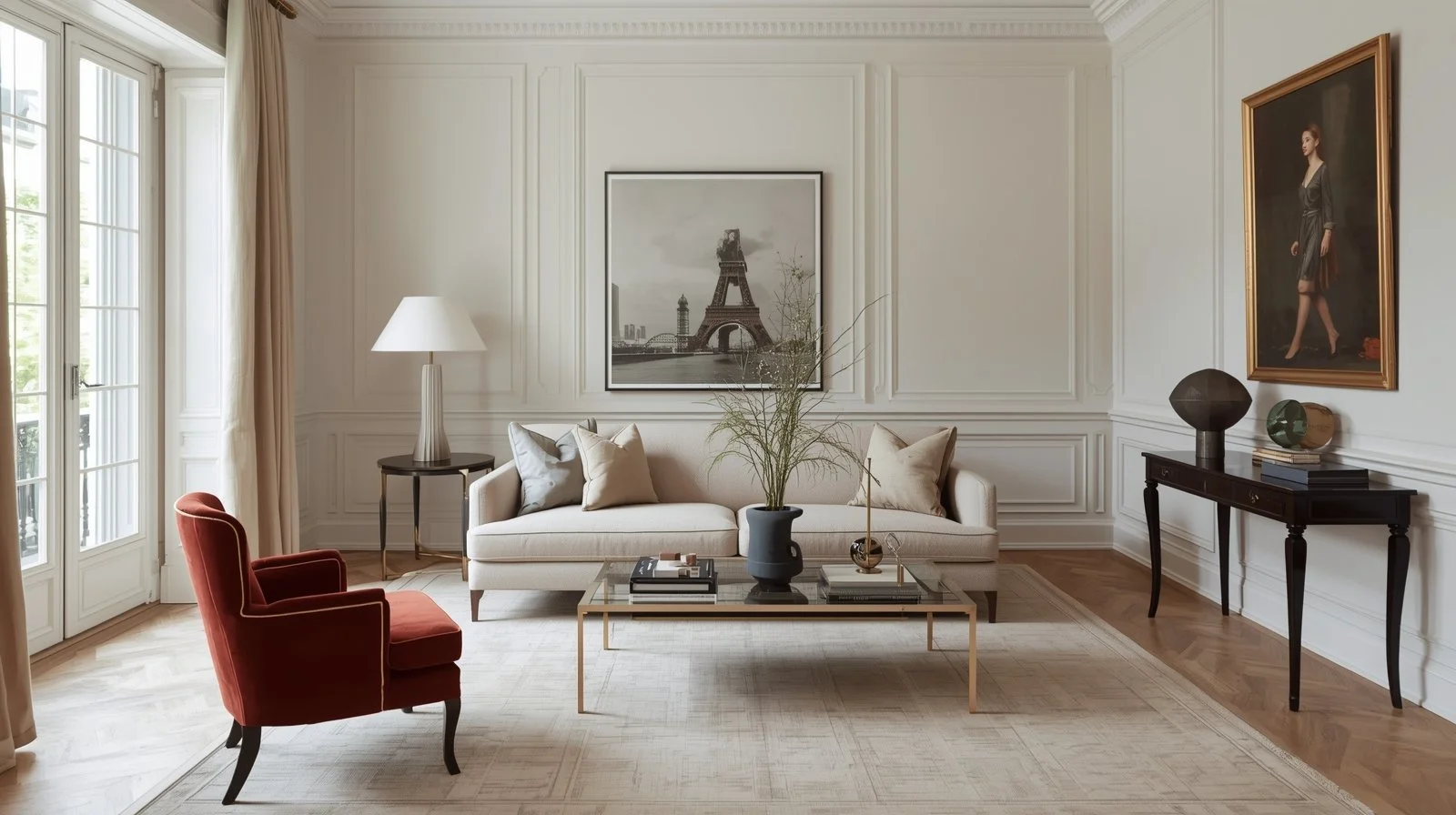
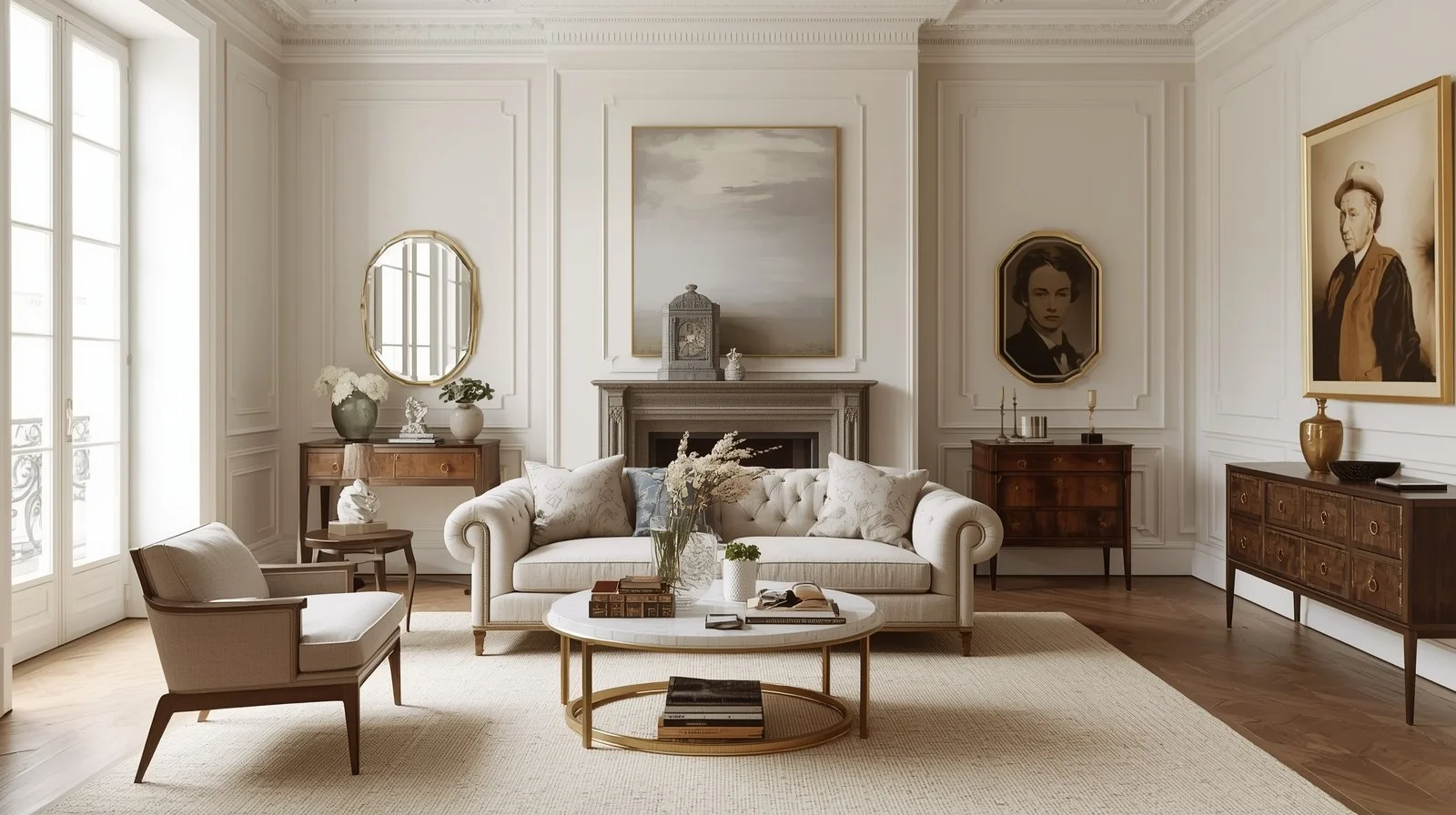
Start by mixing periods with confidence. A sculptural Art Deco table can sit effortlessly beside a mid-century chair. A contemporary lamp can rest on a centuries-old console. The magic is in the dialogue between eras. When pieces come from different times, the room gains depth and quiet tension.
Favor elegance over bulk. Parisian furniture tends to feel refined — curved legs, slender silhouettes, graceful proportions. Even substantial pieces carry a sense of lightness. Avoid anything overly heavy or oversized unless it is intentionally dramatic.
Embrace imperfection. A table with worn edges, a chair with visible age, a cabinet with subtle patina — these details give the room soul. A slight tear in velvet or a softened marble corner tells a story. These marks of time are not flaws; they are character.
Include one bold statement in each room. It might be an oversized pendant light, a gilded mirror leaning casually against the wall, or a striking piece of artwork. The statement piece anchors the space without overwhelming it. Everything else supports it quietly.
Allow furniture to breathe. Let it float when possible. Pull a sofa slightly away from the wall. Place a chair at an angle. Create small conversational groupings. Parisian rooms rarely feel boxed in; they feel relaxed, as though arranged for living rather than display.
Ultimately, it’s not about leaning minimalist or maximalist. It’s about balance. Contrast. Space. A room that feels layered but breathable — curated, yet never forced.



Room-by-Room Styling the Parisian Way
Now let’s bring the aesthetic to life, room by room.
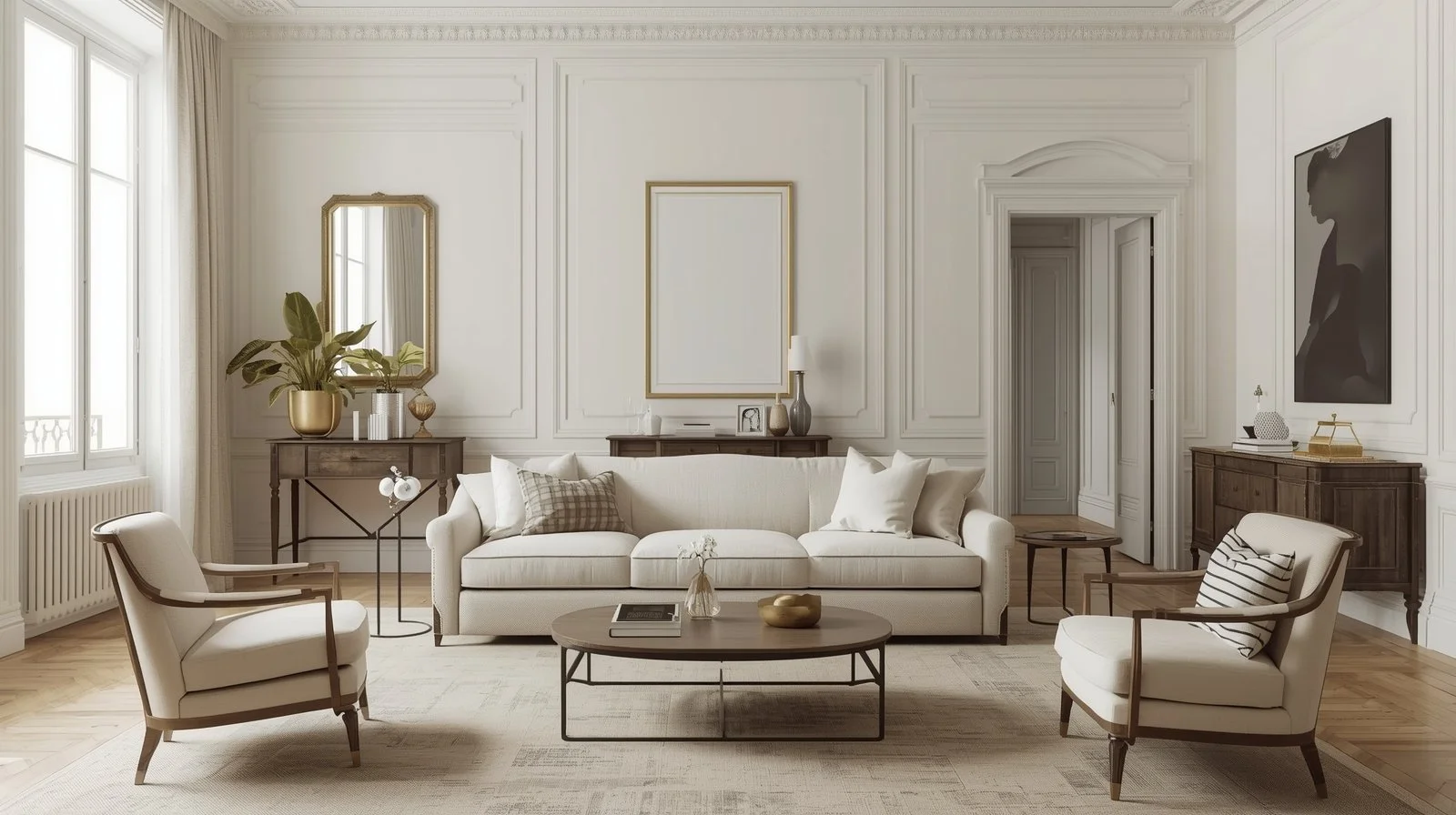
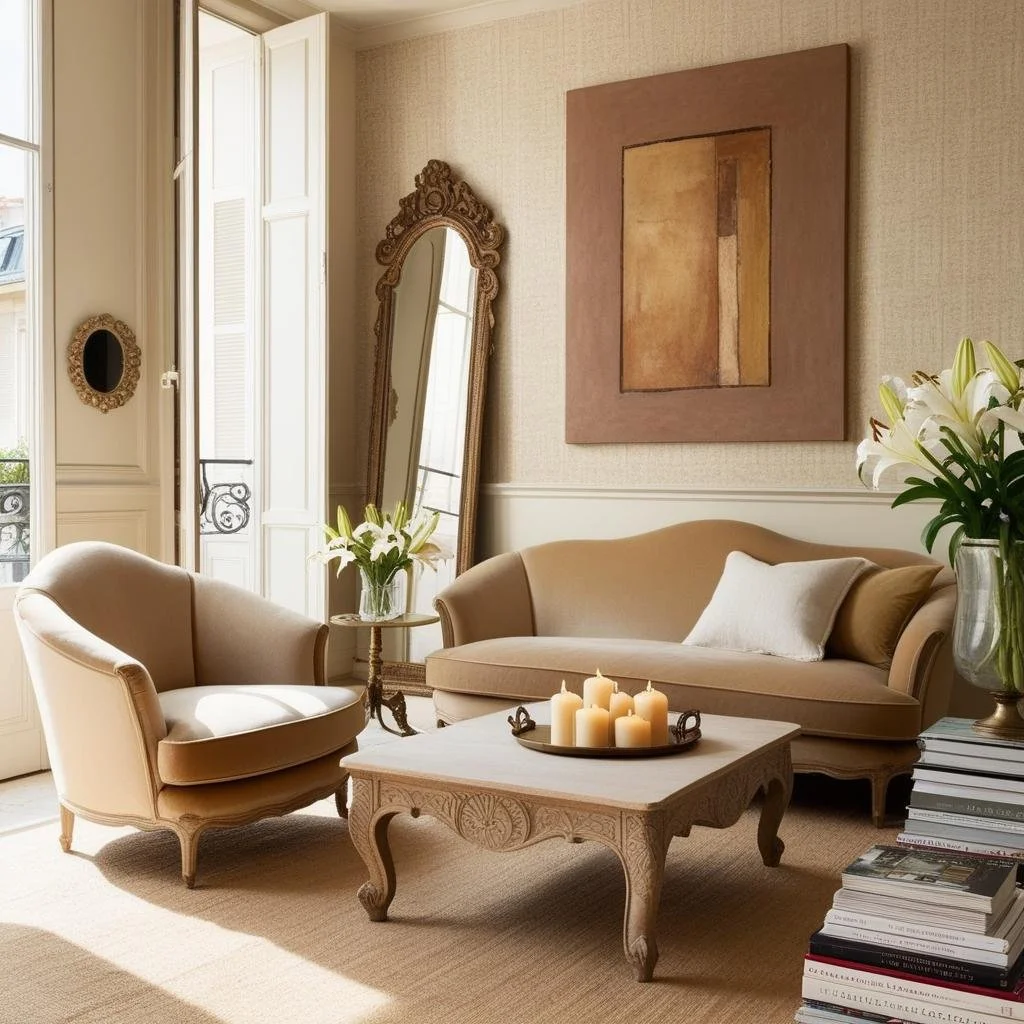
Living Room:
This is where the Parisian sensibility shines. The living room is both a space to entertain and a retreat to read, rest, and reflect.
Key elements:
A neutral or velvet sofa (in sand, blush, or deep grey)
A carved marble or wooden coffee table
A large mirror leaning casually against the wall
Art: one oversized piece or a few thoughtfully placed frames
Stacks of books, softly lit candles, fresh flowers in an old glass vase
Resist the urge to overfill. Leave space. Let light and stories live here



Bedroom:
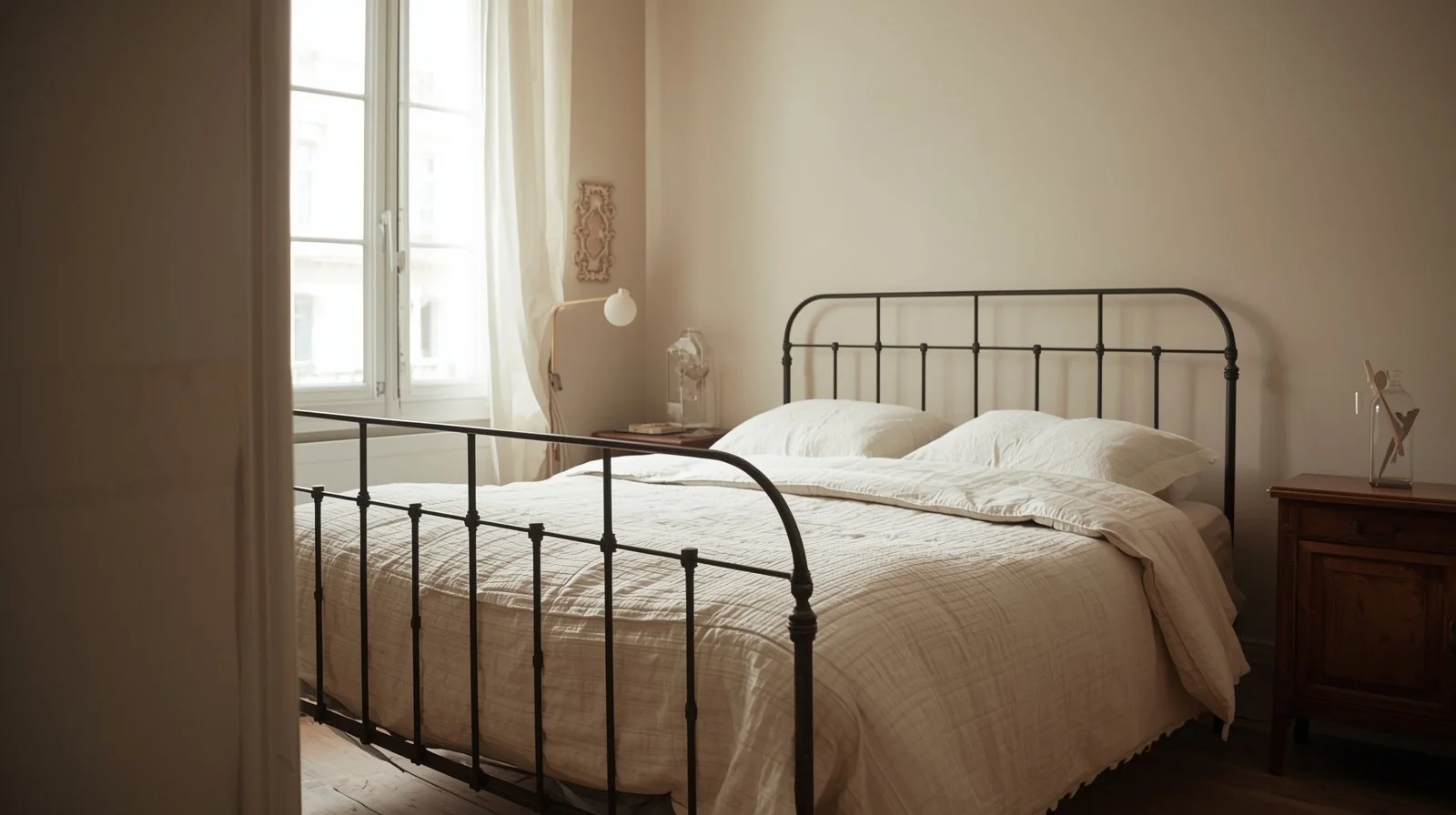
The Parisian bedroom is a sanctuary of simplicity and sensuality.
How to achieve the look:
Crisp white sheets, topped with a linen or gauzy duvet
A soft rug—wool or vintage Persian
Mismatched nightstands, or even a stack of books as one
One small sconce or table lamp per side
A touch of gold or velvet for softness
Don’t fuss over symmetry. Let the room feel restful, not rigid.


Kitchen:
Parisian kitchens often feel like extensions of the living space—lived-in, full of charm, and rich in texture.
Try this:
Open shelving with ceramics, wooden spoons, and glass jars
A bistro table and two bentwood or cane chairs
A marble or butcher block countertop
A vintage rug for softness and warmth
Brass or matte black fixtures to contrast the softness
A single candle, a fruit bowl, and a hanging apron can bring the whole mood together


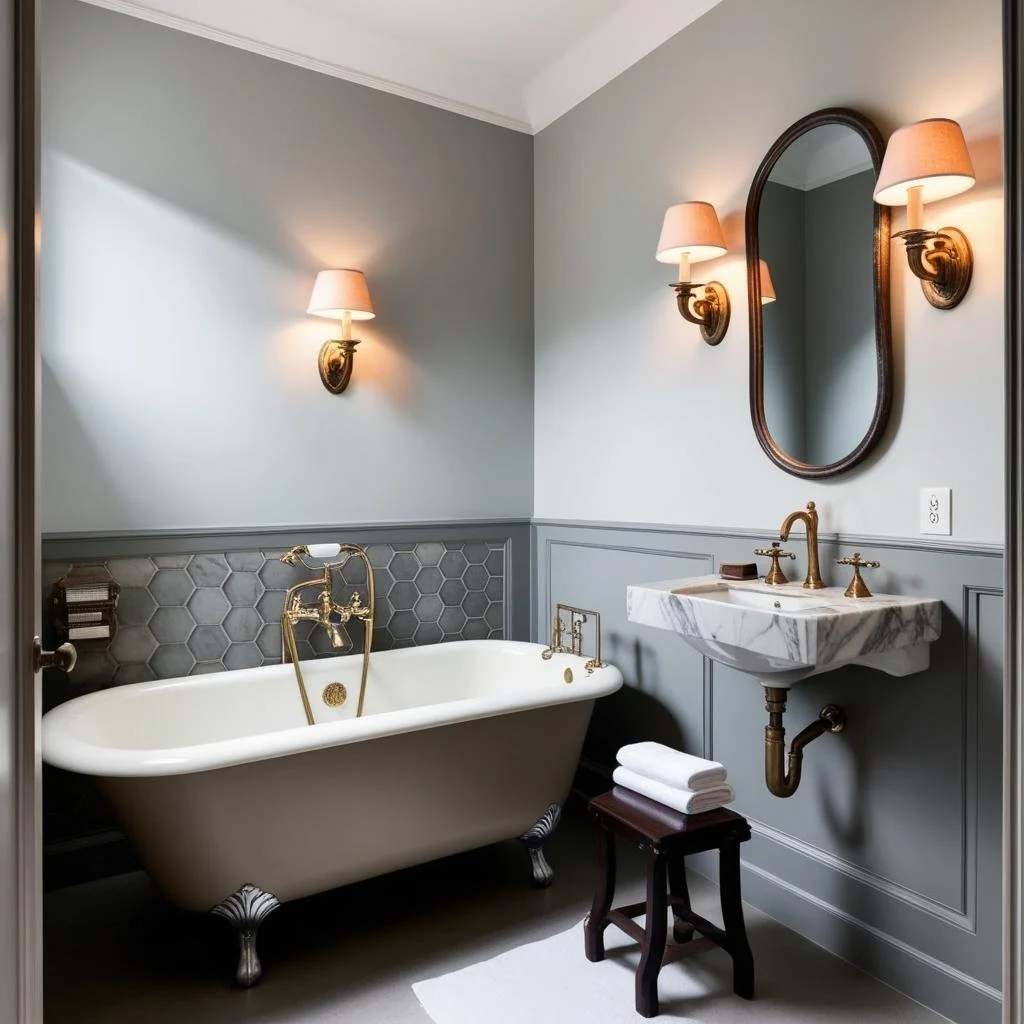
Bathroom:
Compact, but never sterile—Parisian bathrooms are moody and romantic.
Touches to include:
A freestanding tub (if possible), or a sleek tiled shower
A curved mirror above a marble or vintage-style sink
Sconces on either side for soft lighting
A wood stool for towels or books
Dried flowers or eucalyptus hanging in the shower
It’s about creating rituals, not routines.

Entryway:
Even the smallest vestibule can feel graceful.
Place a narrow console with a mirror above. Use a bowl for keys, a tray for mail, and a basket for shoes. If there’s room, add a petite armchair or art leaning against the wall.


How to Begin: A Parisian State of Mind
Creating a Parisian home isn’t about rushing to decorate or spending a fortune. It’s about shifting your perspective.
Start with what you already love. Edit gently. Add slowly. Let your space evolve as you do.
You don’t need more—you need meaning.
You don’t need trends—you need truth.
You don’t need to impress—you need to feel at home.
Romance, History, and a Touch of Rebellion
The Parisian interior invites you to be yourself. To embrace beauty, but also utility. To welcome history, but not be bound by it. To allow a touch of indulgence in the everyday.
Whether it’s a velvet pillow, an aged brass candlestick, or a favorite book leaning beside your bed—these are the quiet luxuries that define the Parisian home.
It’s a lived-in elegance. A quiet kind of rebellion against perfection. A home that speaks softly, but always leaves a lasting impression.
